A press release went around the travel trade this spring calling Argentina South America's rising star for 2026, powered by World Travel Awards recognition and massive demand for Patagonia. I chased it, the way I chase a connection I do not trust, and it came apart in my hands. The piece that started the run, Travel And Tour World's "Argentina overtakes Chile, Colombia, Ecuador and Peru as South America's rising star for 2026", names no operator, quotes no official, cites not a single booking figure, and never once mentions the exchange rate, which is the only number that decides whether your trip is cheap. So here are the numbers it left out.
Start with the award, since the whole story hangs on it. The 2025 World Travel Awards named Peru, not Argentina, South America's Leading Destination. Argentina's actual win was Buenos Aires taking the Leading City category. That is a trophy for one city, handed out by an industry body that runs on nominations and votes, not on anyone counting arrivals at the border. A city prize is not a country crowned.
Now the arrivals, because those are counted. Argentina's statistics office, INDEC, logged 463,100 foreign tourists in April 2026, up 10.6 percent on the year, with the first four months up 6.5 percent. Read it the way the bulletin reads it, though, and the growth is measured against 2025, one of the weakest tourism years the country has had. This is a rebound off a bad base, not a country outrunning its neighbors. Step back to the longer view and the Fundar think tank's ArgenData numbers are blunt: Argentina is one of the only countries on earth to have shrunk its tourism exports in relative terms since 2010, took in 6.6 million foreign visitors in 2024 (about 0.4 percent of the world's arrivals), and has run a tourism deficit in 42 of the last 49 years. And the traffic runs the other way now. In that same April, 764,800 Argentine residents left the country, more than one and a half departures for every arrival, and INDEC's first-quarter balance of payments put the travel deficit at 3.18 billion dollars, nearly three dollars leaving for every one a foreign visitor spent. Read together, the state's own numbers describe a country whose foreigners are staying away and whose own people are fleeing abroad to spend.
Why the reversal? The peso. When President Milei lifted the currency controls, the cepo, in April 2025, the parallel rates collapsed into the official one, and the discount on the blue dollar, the illegal-but-tolerated street exchange rate that once ran close to 50 percent below the official one, converged to a rounding error. Inflation, by INDEC's own index, is still near 33 percent, but the currency did not cheapen to match. The blue-dollar arbitrage that made Argentina absurdly cheap is gone. Travelers now report a Buenos Aires coffee costing more than one in Barcelona or Paris. The country is not unaffordable, still perhaps 40 to 60 percent under a major Western European or US city, but the era of the 2019 bargain is finished, and the trade sheets selling you Argentina on price have not looked at the exchange rate.
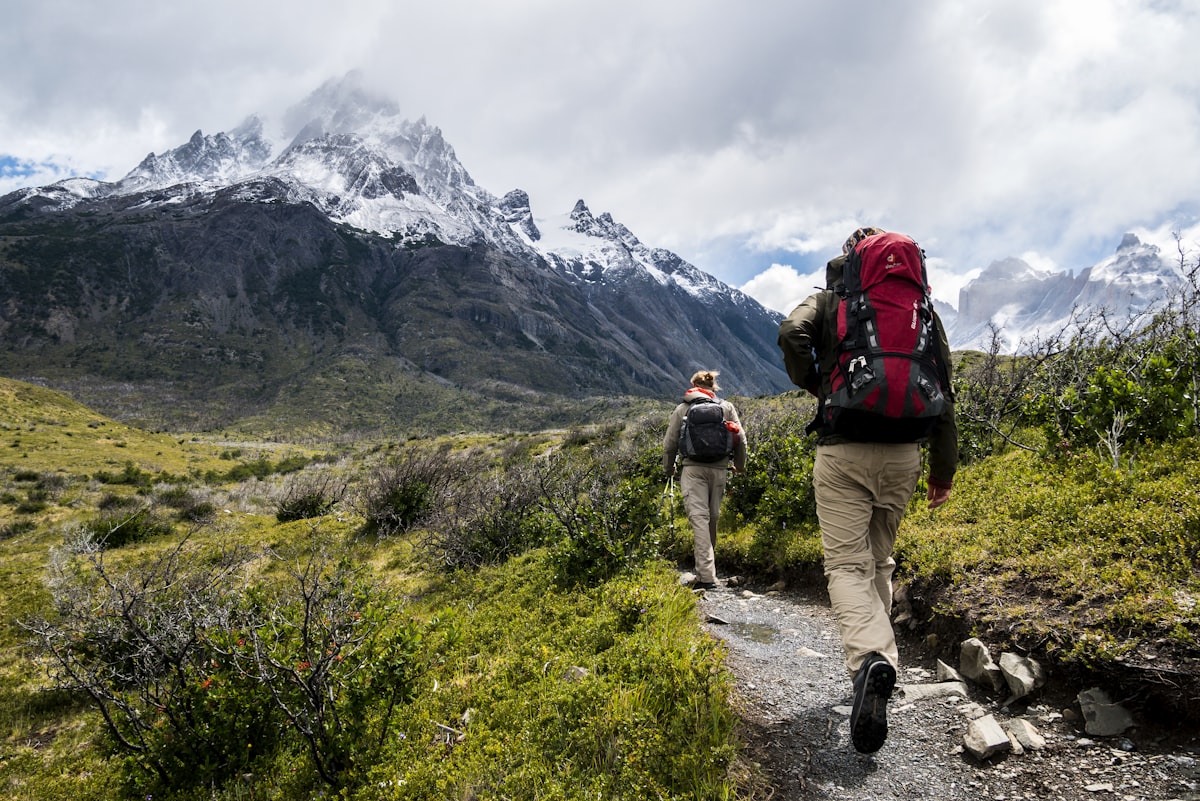
Here is what is genuinely true in that press release, buried under the hype: Patagonia demand is real, and it is a border problem. The pressure sits on the Chilean side, in Torres del Paine, where a booking to sleep in the park has been mandatory to enter since October 2016, entry is sold only in advance through the park authority CONAF's pasesparques.cl portal, and the refugios on the marquee W trek book out 4 to 6 months ahead across two separate operators, Las Torres in the east and Vértice Patagonia in the west. Miss that booking window and the mountain simply turns you away. So people cross into Argentina, to El Chaltén, the scruffy trekking town at the foot of Fitz Roy, where the hiking has long been walk-up: no refugio lottery, day trails to Laguna de los Tres and Laguna Torre, decide over breakfast and go. That is the real engine here. Not a discount, a relief valve.
But be honest about El Chaltén too, because the guidebooks are a year behind. The free-Patagonia line died in October 2024, when Los Glaciares started ticketing the northern zone. Both zones now charge foreigners 50,000 pesos, about 33 dollars, since June 2026, up from 45,000 in January, bought online or by QR code only, no cash at the gate. Still cheaper and far freer than Torres del Paine, but no longer free, and the fee ratchets with inflation like everything else here.
So the practical trip. The season is November to March; December to February gives you the best weather and the worst crowds and the wind that will test your tent pegs, while November and March thin the trails and, in March, turn the lenga forests red. Fly into El Calafate for the Perito Moreno glacier, and use it as your jump-off to El Chaltén three hours up the road; budget 10 to 12 days if you are stringing the Argentine and Chilean sides together, and book park lodges half a year out. Bring pristine hundred-dollar bills printed after 2013 if you bring cash at all, though with the rates converged, your card now does most of the work the black market used to.
The trade calls Argentina a rising star. The data calls it a country that got expensive at the exact moment everyone noticed the mountains. Go for Patagonia, which earns every hour of the flight. Just do not go for the bargain, which quietly expired while the brochures kept quoting it.