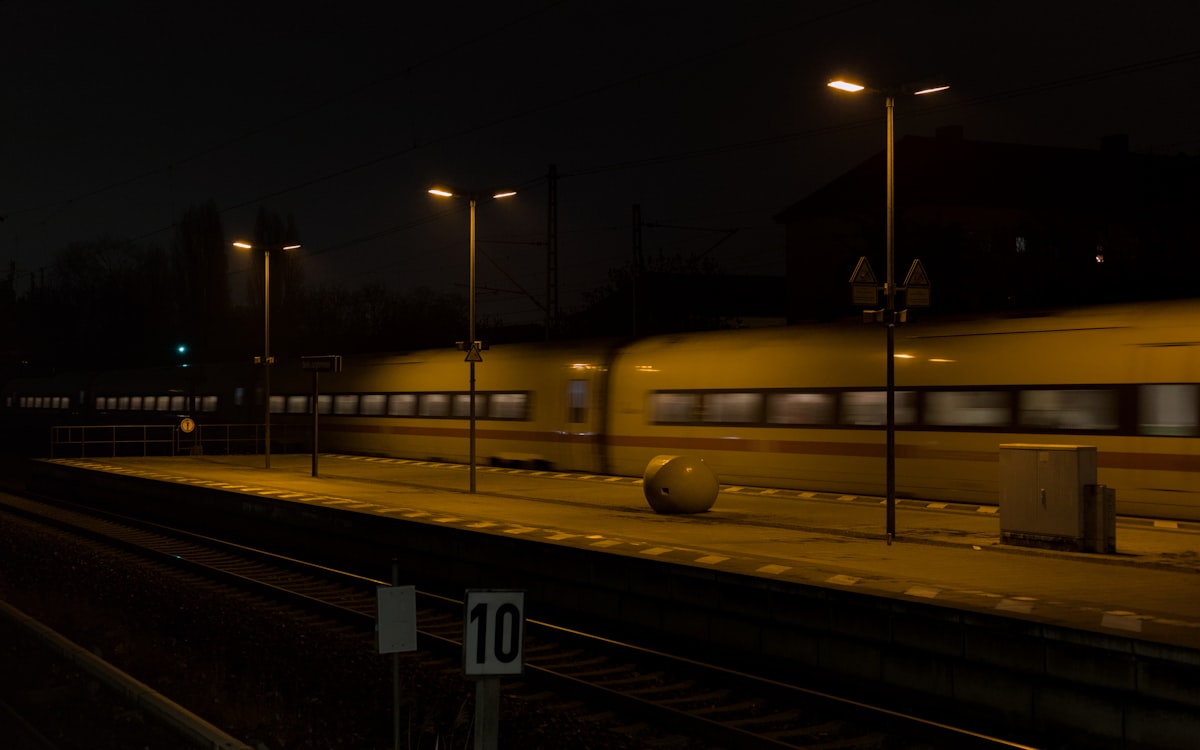
Stand on the concourse at Brussels-Midi on a Tuesday evening in April and you can watch the whole argument about European night trains play out on two platforms. On one, a Eurostar unloads from London. On the other, at 21:43, a train run by European Sleeper, the open-access operator that sells its own tickets with no public service contract behind it, pulls in from Paris and pauses before it runs on to Liege and Berlin. It is scheduled out of Paris-Nord at 17:45 on the operator's own timetable and reaches Berlin Hauptbahnhof at 09:59 the next morning. No airport, no 40-minute transfer from a field in Beauvais, no bag fee. A stranger with a timetable planned this, and for the first time since December it works again.
For most of a decade the story people told about sleepers was recovery. Since Back-on-Track, the campaign coalition that lobbies for night trains, started drawing its annual map of the continent's overnight services, the arrow mostly pointed up. This year it points both ways. The 2026 edition, reported by Euronews in June, records five new connections and ten that vanished. That is the number to hold onto: not the revival, but the churn. Demand is not the problem. Rolling stock and, more than anything, money are.
The trains no ministry can cancel
Start with the good news, because it is genuinely good. European Sleeper, the Dutch-Belgian cooperative behind that train, launched its Paris-Berlin service on March 26. By the operator's own timetable it runs three nights a week each way, Paris out on Tuesday, Thursday and Sunday, Berlin back on Monday, Wednesday and Friday. Folded together with the operator's existing Brussels-Amsterdam-Berlin-Prague sleeper, that gives six Brussels-Berlin nights a week. Fares start at 49.99 euros to Berlin and 79.99 from Paris, with a seat at the bottom, a five-berth couchette in the middle, and a proper sleeping-car bed at the top for a couple hundred. There are women-only compartments, which I will come back to, because it is the first question I get and the last one most operators answer. From London you make it by catching the 15:04 Eurostar to Brussels and stepping across.
I want to be careful here, because I have been wrong about exactly this route in exactly this section. When OeBB, the Austrian state railway, relaunched the Paris-Berlin Nightjet in December 2023, I filed a column calling it permanent infrastructure, proof the continent had turned a corner. It was cut two years later. I had sent readers to book a line that no longer existed. So I no longer grade a night train by how nice the cabin is. I grade it by who pays for it, and whether that person can leave.
By that test the European Sleeper revival is the interesting one, because nobody is propping it up. The company says it has carried more than 230,000 passengers since 2023 on its Brussels-to-Prague spine, funded by a cooperative of over 4,000 small shareholders who put in more than 5 million euros, and it went back to that crowd in December for another 2.3 million to pay for the expansion. It projects its Prague route reaching operational profitability this year and the whole network turning positive from 2028. Those are the numbers of a business, not a gesture. You can disagree with the projections. You cannot cut them with a budget line in Paris.
Two more legs are coming. From July 13, as RailTech reported, the Paris-Berlin train adds a stop at Hamburg-Harburg, timed for the day the track works on the Hamburg-Berlin line finish. Harburg is 18 kilometers from Hamburg's main station, 16 minutes on the S-Bahn, and the eastbound train calls there at 06:57, which is an early but honest start toward Denmark, Sweden and Norway. Then, on September 9, European Sleeper opens Brussels-Milan, its third route and its first into Switzerland and Italy, calling at Cologne, Zurich, Lugano and Lake Como, from 49.99 euros in a shared compartment. It was originally due in October and now runs from September 9, its timing shaped by German summer engineering works and the wait to certify a train to run in Switzerland. From December it picks up Antwerp, Breda and Eindhoven. A direct Amsterdam portion is deferred to 2027 because the off-peak numbers do not add up. Back-on-Track's vice chair, Giovanni Antoniazzi, told Euronews the Swiss leg is the operationally hard part, and he is right to. Book it, but book it knowing a first-season sleeper across three borders will have a rough patch.
Cut where the money stopped, not the passengers
Now the ten that went the other way, because they are the same story told by the funders. The Paris-Vienna Nightjet, launched in 2021, and that Paris-Berlin Nightjet I oversold, both ran their last service with the December 14, 2025 timetable. The cause was not empty trains. In a statement on September 29, 2025, reported by Railway Gazette, SNCF Voyageurs said the routes had averaged 70 percent occupancy in 2024 and had carried 66,000 people that year, running only three days a week. The cause was that the French Ministry of Transport ended the subsidy, put at around 10 million euros a year for the Berlin service, which had been meant as two years of post-COVID support and became a casualty of the current budget crisis. SNCF's own explanation, in the same statement, is worth reading slowly: a seat on a night train can be sold once a day, it said, where an airplane seat sells up to five times and a day-train seat up to four, and the staffing costs are higher because you need cabin crews and border-crossing crews. Even at higher occupancy, it said, the numbers would not add up without help. Germany, through which more than 60 percent of the Berlin route runs, paid nothing. OeBB could not run the line alone anyway, because its Siemens Vectron locomotives are not approved to operate in France. And OeBB did not abandon sleepers wholesale: it kept its Vienna-Brussels, Vienna-Amsterdam and Munich-Rome Nightjets and is buying 24 new-generation trains. It let go of the routes where the money stopped, not the ones where the passengers did.
The clearest casualty is further north. The Stockholm-Narvik sleeper, roughly 1,456 kilometers and one of the longest night trains in Europe, stopped running direct on April 13. Sweden halved its Norrland and Lapland night service, cutting trains 93 and 94 between Boden and Narvik, after Trafikverket reduced its funding to SJ and then twice cancelled the procurement because the bids came in over budget. A separate tender for 91 new coaches and 10 locomotives collapsed in June 2025 when no bid met the spec, Railway Gazette reported. Juri Maier, who chairs Back-on-Track and drew the map, put the diagnosis plainly to Euronews: "The biggest obstacle for night trains in Europe and the main reason why the train to Narvik was stopped is the lack of investment in rolling stock." A direct service is promised back in December 2026 and new vehicles in 2030. Until then you ride the sleeper to Boden and change to a day train through Kiruna and Abisko, which is not a hardship, it is one of the great rides on the continent, but it is a change, and I will not tell you it is not.
Spain killed its sleepers and never looked back
Which brings me to the country that has no night trains at all, and did it to itself. Spain ran the Trenhotel, Talgo sleepers on the broad Iberian gauge, until March 2020, when Renfe suspended the lot during the pandemic and never brought them back. It cited losses near 25 million euros a year, aging trains, and its own high-speed daytime network eating the same city pairs. The gauge is the quiet villain: Spain's conventional lines run on 1,668 millimeters and its high-speed lines on standard gauge, so a sleeper across the French border needs gauge-changing Talgo stock, and when the cross-border high-speed line opened in 2013 the case for the night train collapsed. The Madrid-Lisbon Lusitania and the Sud Express went in 2020, and Lisbon lost its only international train. People keep announcing a revival. Nothing runs. It is the useful counter-example: a wealthy rail country can simply decide sleepers are not worth it, and the map goes dark without a single track being torn up.
Book the berth, not the brochure
So here is how I would read the 2026 map, and how I book off it. The advocates are right that the demand is real. Maier points, in the same Euronews piece, to concepts for carrying up to 750 sleeping passengers a train, enough to make many routes profitable, and a 2025 Hitachi Rail survey of 11,000 people found 62 percent globally would back legislation banning short-haul flights where high-speed alternatives exist, rising to 67 percent in Europe. The gap is not travelers. It is berths and budgets. A night train is not only transport, it is the hotel you skip, which is why a couchette to Milan at fifty or eighty euros beats a cheap flight once you add the airport hour and the room you did not book. But none of that saves a route whose fares do not cover it and whose subsidy can vanish in a French autumn.
The women-only compartment, since I promised to return to it. European Sleeper offers it on both couchettes and sleepers, and I book it not out of fear but out of calculation: it costs the same and removes a variable, and a variable removed at 03:00 in a corridor is worth more than the view. That is the whole ethic of reading this map. Book the berth, not the brochure. Ride the routes that stand on their own fares, because those are the ones that will still be there when you go back. Just do not ask me which government will still love night trains next budget. I called one of these permanent once, in print, and the ministry proved me wrong two years later.