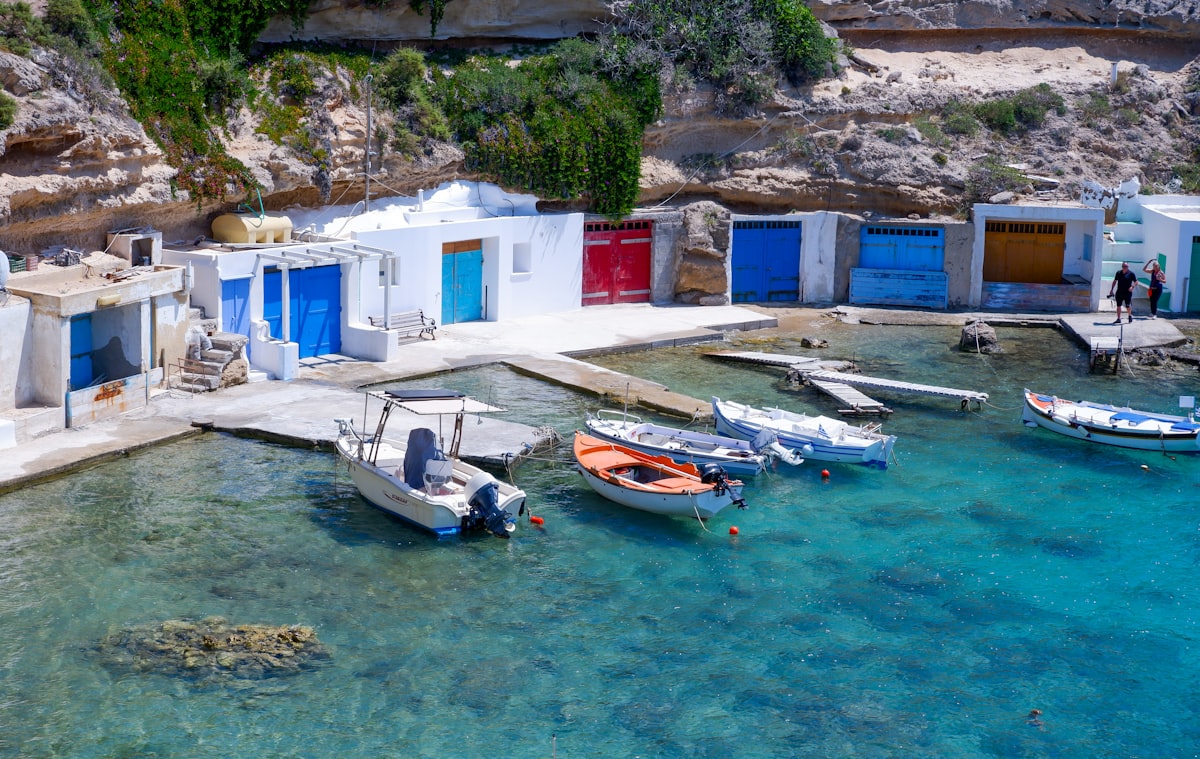
At the ferry desk in Piraeus, Athens's port, the woman ahead of me is buying a ticket to Serifos and having to spell it twice, because the clerk keeps hearing Santorini, which is the whole point. The two islands sit in the same Cyclades, the Greek island group, share the same white-cube postcard, and are separated by about 127 kilometers by sea and one enormous difference in how many people want to go. Serifos has no airport. You reach it only by boat, roughly two hours on a fast ferry from Athens or a little over four on the slow one, and that single fact does most of the sorting.
This is the logic behind the island swap, the summer's neatest travel idea: for every island the crowds have found, there is a quieter one a ferry ride away. Euronews laid out five of them in July, La Gomera for Tenerife, Solta for Hvar, Serifos for Santorini, Procida for Capri, Luing for Skye. The pitch is that you trade a short extra crossing for a great deal less company. Mostly it holds. But the simple version overstates two things, and it is worth being honest about both before you book.
The first is distance. Serifos is not next door to Santorini; it is a different corner of the Cyclades, and the direct boat between them runs seasonally and takes about three and a half hours, longer on the island-hopping boats. The swap is thematic, not a quick hop. You are not slipping around the corner from the crowd, you are choosing a different island in the same sea and reaching it from the mainland. Fine, but know it going in.
The second is the airport. The romantic version of this story is the island with no runway, where everyone arrives by sea. Four of the five qualify. Solta, reached in about an hour on the Jadrolinija car ferry from Split or half that on the Krilo catamaran, has none; the nearest tarmac is Split's. Procida, a 35 to 45 minute Caremar or SNAV hydrofoil from Naples or a shorter ferry from Pozzuoli, has none. Luing has none, and its ferry is barely a ferry at all, a few minutes across Cuan Sound on a turn-up-and-go boat that carries six cars, reached by driving south from Oban over the Clachan Bridge onto the island of Seil first. That last pairing stretches the idea hardest: Skye is a large island people cross the country to walk, and Luing is a small one you reach almost as an afterthought off the mainland road, so you are not getting a quieter Skye, you are getting a different and much smaller thing. Serifos has none. La Gomera, the fifth, does: Binter flies small inter-island planes into it twice a day from Tenerife. Nobody arrives on La Gomera from abroad, and most still take the 50-minute Fred Olsen ferry from Los Cristianos, but it is not the roadless place the framing implies.
What you gain once you land is not a secret. Fewer boats mean fewer people, and fewer people mean a working island rather than a stage set: a harbor that still lands fish, a bakery with one queue instead of a brand, a hill you can walk without joining a procession. What you give up is the polish the crowds pay for. Fewer restaurants, shorter seasons, a car you may not be allowed to bring (Procida bans non-resident vehicles from April to October), a bus that comes when it comes. On these islands you stay put rather than pass through, which is either the appeal or the problem depending on the traveler.
That is the honest ledger. The fare itself is modest, a few euros on foot for the short Croatian and Neapolitan crossings and more for the longer Greek and Canary hauls, and it is the toll that keeps the island the reason you came. Buy the ticket, and let the clerk mishear the name.