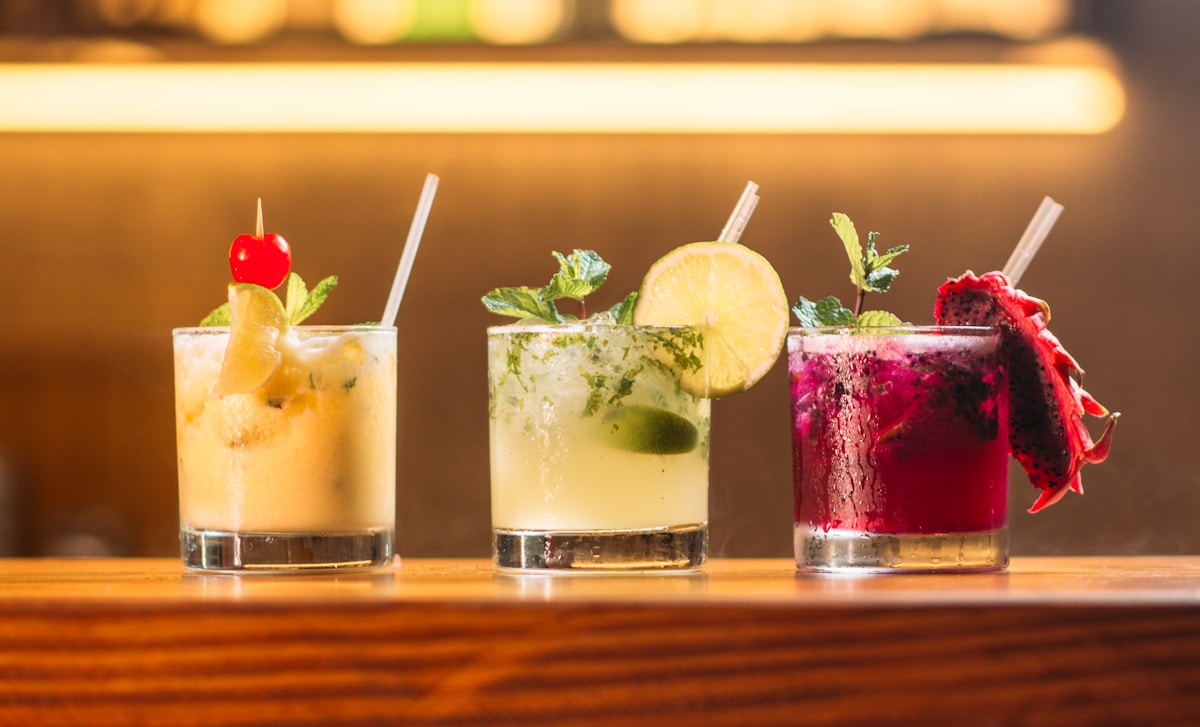
I ordered a drink with no alcohol in it last month and paid $12 for it, and the bartender did not blink. A few years ago that was a joke with a garnish: something soft meant a flat cranberry-and-soda for $3 and the feeling of being punished for showing up. That drink is gone. What replaced it costs almost as much as the cocktail next to it, and here is the part nobody says out loud: for the bar, it is often the better drink to sell.
Look at the pour cost, the way you would look at the seams on a coat to see how it was really made. A bar builds a cocktail to land somewhere around an 18 to 22 percent pour cost, about a fifth of the price on the check. A zero-proof drink can come in lower, at 10 to 15 percent, because the expensive part, the alcohol, is not there. In the United States there is no federal excise tax on a non-alcoholic spirit, so a whole line of cost simply disappears. Backbar, a bar-inventory software firm, runs the comparison on a negroni: the real one costs about $3 to build and sells for $14, clearing $11; the zero-proof version costs about $1.50, sells for $12, and clears $10.50. The booze drink clears the extra 50 cents in raw dollars, but the one without alcohol wins on margin, on input cost, and on the tax it never pays.
That is the whole trick, and it only works because enough people now want the drink. Younger drinkers are drinking less, and the clearest data is American. There, no-alcohol spirits have been the fastest-growing part of the whole spirits category, running a five-year compound growth rate above 60 percent through 2024, according to the drinks-data firm IWSR, while full-strength spirit volumes actually shrank over roughly the same stretch. In US shops, NielsenIQ counted zero-proof spirit sales up 108 percent by the bottle and 86 percent by the dollar in the year to late December 2024. The category has a founding date: Seedlip, the first distilled non-alcoholic spirit, launched in London in 2015 and sold out fast enough that by 2019 Diageo, the biggest spirits company there is, had bought a majority stake. Diageo now says the non-alcoholic part of its business grew about 40 percent in its 2025 financial year, faster than the beer and spirits it is better known for.
The real fight is over the price tag, because charging cocktail money for no cocktail is not an obvious sell, and the people who run these programs are surprisingly united on how to do it. The point of the price is to say the drink is not an apology. A co-owner of Getaway, an alcohol-free bar in Brooklyn, told the trade site The Zero Proof that a $5 drink "would seem cheap," while a higher price says "we're putting work into this." Chris Struck, who ran the drinks at ilili in New York, put the accountant's version to Salon: the absence of alcohol "doesn't change the costs of the goods and services that a restaurant sells in order to exist." The labor, the fresh citrus, the rent on the room, all the same. Only one ingredient went missing, and it was the one the government taxes.
So is this a real revenue stream or passing good manners? I lean toward real, with one caveat. The growth is genuine but off a small base, and the same Diageo that leads the category watched its overall sales slide in the most recent half-year, with the non-alcoholic line the rare bright spot in a business that is otherwise flat. But bars do not run on sentiment, and a drink that costs less to make, carries no tax, and sells to a growing room of people who used to order tap water is not a fad a good operator gives up. The next time the no-alcohol option is priced a couple of dollars under the cocktail rather than at soda money, that is not generosity. That is the bar keeping its best-margin drink on the menu and hoping you order it.