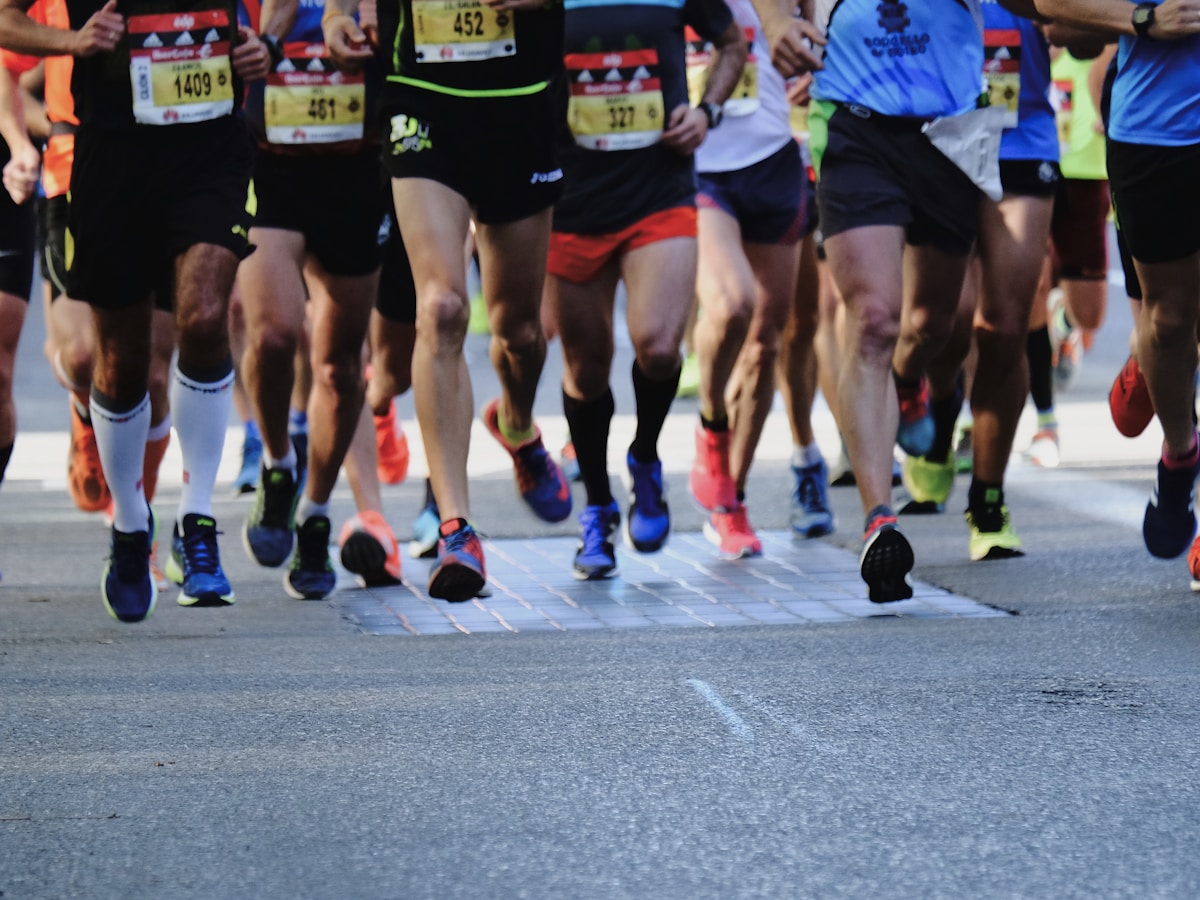
Turn a running shoe inside out and there is nowhere to hide. A handbag can carry a bad lining down a runway because you will never see it; a road shoe cannot, because a stranger is going to put twenty miles a week through the midsole and the foam will tell the truth in about a month. This is the part of fashion I trust most, the part that gets tested by a person sweating on a Tuesday, and it is why the running category is the most honest ledger in the whole business right now. The numbers coming out of it in 2026 are not a story about marketing. They are a story about who can actually build the thing.
Start with Nike, because everyone does. Elliott Hill took the chief executive's chair in October 2024, a company man of more than thirty years brought back to fix a house that had talked itself into trouble. His own word for where the turnaround sits is "middle innings," the baseball phrase for a game half played, which is honest, and the clearest bright spot is exactly where you would want it to be if you believed in construction over noise. Nike has now posted five straight quarters of double-digit growth in running, more than 20 percent for three of them, and by its own account has added roughly a billion dollars back to that business, along with about five points of market share in what it calls statement footwear across Western Europe and North America (WWD). The shoes doing it are real shoes with real names, the Vomero Plus, the Pegasus Premium, the rebuilt product lines a serious runner can tell apart. That is the tell. When a giant recovers on product rather than on a campaign, the recovery has a floor.
What nearly sank it is worth saying plainly, because it is the frame for everyone else. Nike spent 2022 and 2023 pulling away from the shops that sell shoes to walk-in customers, betting the future on selling direct to consumers, what the trade calls DTC, and it vacated shelf space at Foot Locker and Dick's that it is now scrambling to reclaim. Ed Stack, the executive chairman of Dick's, put it without varnish on the call for his company's roughly 2.5-billion-dollar deal to buy Foot Locker: Nike "moved into DTC and away from wholesale partners a while back, and it hurt Foot Locker pretty significantly," and has since "changed their position, and is really leaning back into wholesale" (Shop-Eat-Surf; Retail Dive). While Nike was busy abandoning that floor, other people were standing on it.
They were the challengers, and this is the year you can measure them. Nike stays off the chart below on purpose: its double-digit run is a running-segment figure, not a company-wide one, and its fiscal year ends in May, so it does not belong on the same axis as everyone else's annual, all-brand growth.
On, the Swiss brand with the cushioning that looks like a set of teeth, cleared three billion Swiss francs for the first time in its fiscal 2025, up 30 percent as reported (On Holding). It also did something quieter that matters more for the next decade: in Piper Sandler's fall 2025 survey of American teenagers it climbed to fourth among footwear brands and passed Hoka to get there. Hoka, the Deckers-owned marshmallow that a decade ago was a shoe for ultramarathoners with ruined knees, reached about 2.6 billion dollars in the year ended March 2026, up about 16 percent (Deckers). And New Balance, still private and still run like it means to stay that way, reported about 9.2 billion dollars in global sales for 2025, up 19 percent, which is roughly 180 percent more than it sold in 2020 (WWD). I should be honest that a good deal of this is lifestyle, not sport: plenty of On runners and New Balance 990s will never see a starting line, which is the very thing I am about to hang on Puma. The difference is that the brands turning that attention into a durable business are the ones whose shoe also survives contact with a Tuesday, and enough real runners have decided On's and New Balance's do. Puma's did not.
Adidas is the interesting middle case, the incumbent that remembered what it was for. It posted record revenue of 24.8 billion euros in 2025, with the Adidas brand up 13 percent currency-neutral for a second straight year, and its running business accelerating hard on the back of the Adizero family (Adidas). Then in April 2026 it did the thing that no marketing budget can buy: at the London Marathon, athletes in the Adizero Adios Pro Evo 3 broke records, including the first sub-two-hour finish inside an actual race. You cannot fake a stopwatch. Performance heritage, the boring phrase, turns out to be the whole asset.
Which leaves Puma on the other side of the line, and I do not have to reach for the verdict, because its own chief executive got there first. Arthur Hoeld, laying out the brand's strategy reset last autumn, said it "has become too commercial, overexposed in the wrong channels, with too many discounts," which is a man describing hype and lifestyle drops where the running specialists were building shoes. The numbers agree with him: full-year 2025 sales fell about 8 percent currency-neutral to 7.29 billion euros, with a third quarter down more than 10 and a fourth down 20, and an operating loss to show for it (WWD). Hoeld is calling 2026 a "transition" year and does not expect growth to return before 2027. He will run it under new scrutiny, too, because Anta Sports has agreed to buy the Pinault family's stake and is set to become its largest shareholder once the deal closes. A transition to what is the question, and the honest answer is a transition back to making shoes people run in.
The loudest part of the year is already behind us. The Winter Olympics came and went in Milan and Cortina in February, the men's World Cup has all but finished across the United States, Canada, and Mexico, and every brand spent enormous money to be seen at both. But the seeing was never the selling. The selling happens now, in the months after the spectacle, through the autumn and the holiday season and into the fiscal numbers each of these houses will report in the new year, back on the wholesale shelves Nike is crawling to reoccupy. That is when a person who watched all of it walks into a shop on an ordinary Tuesday, picks up two shoes, and has to decide which one is worth the money. They will turn it over in their hands. They will not read the campaign. And the shoe that works will win, the way it always has, which is the most reassuring sentence I have written about this industry in a while.