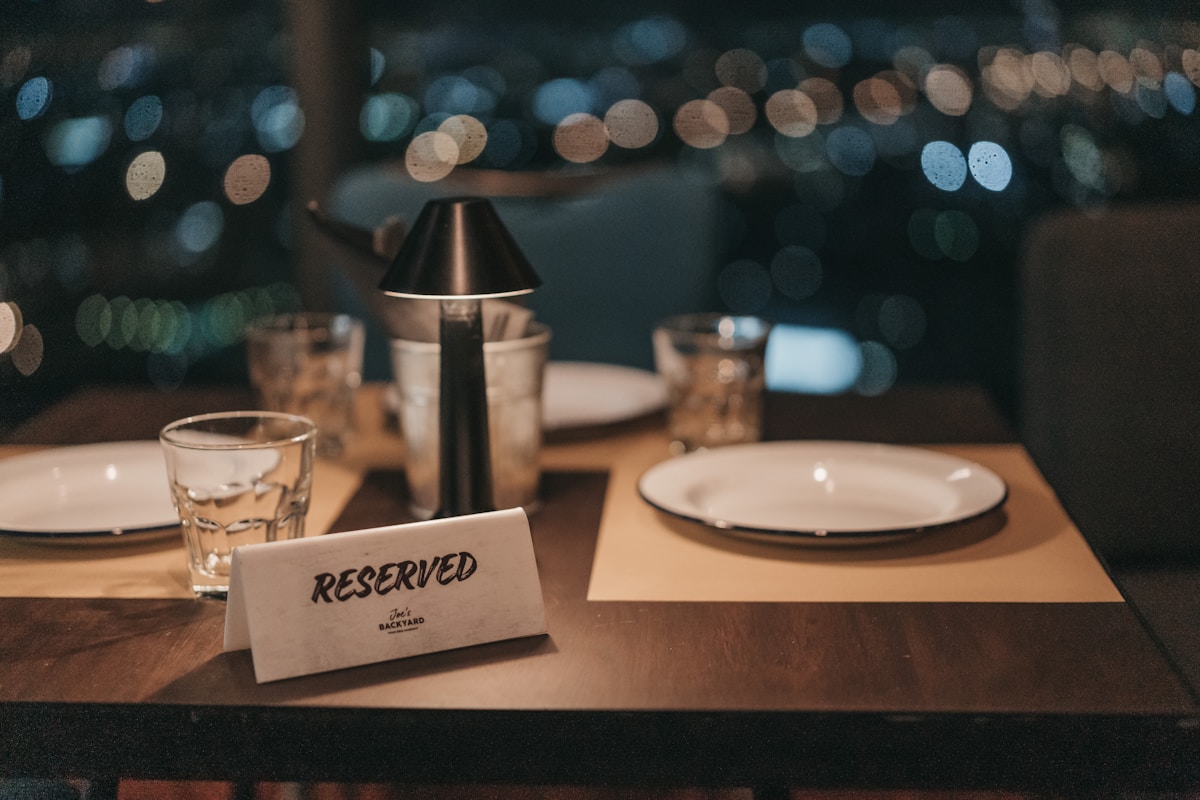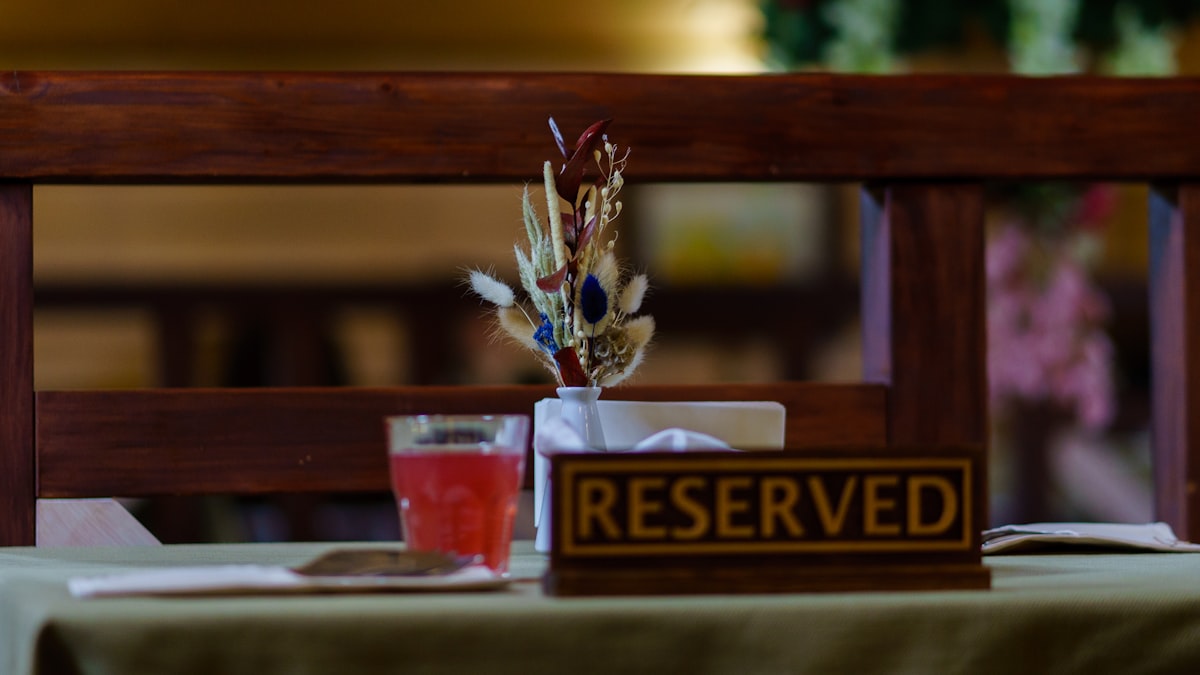
A Thursday night at Carbone in Manhattan has been listed on a resale website for 340 dollars, before you have ordered a thing. A table at the Polo Bar has gone for 650. On Appointment Trader, the marketplace that made this a business, a Brown University sophomore named Alex Eisler resold tables he never intended to sit at, pocketing roughly 70,000 dollars in a year by The New Yorker's count. His single best sale, he told Business Insider, was a Boston omakase restaurant for 1,358. "It has never really been about the money for me," he said. "I just wanted to bring supply and demand together." That is the tell. Supply and demand were always in the room. What changed is that someone finally printed the number.
The mechanism is dull, which is why it works. Software polls a restaurant's booking page at machine speed the instant new inventory drops, 10 or even 100 times per second, around the clock, and grabs the eight o'clock two-top before a human has finished typing. Appointment Trader, founded in 2021 by a German-born entrepreneur named Jonas Frey after a bad experience with a Las Vegas DMV appointment, matches the holder of that slot with someone willing to pay for it and keeps a cut of 20 to 30 percent. By Frey's own account the platform moved about 2.4 million dollars in reservations in the year to April 2023, as the New York Times reported (via the Seattle Times); NBC News later put a recent 12 months closer to 5.7 million. Take those figures with the salt they deserve; they are self-reported by a man with an interest in the number sounding large. "We are in America. We can buy everything," Frey told Columbia News Service. "Why can't we buy other people's time slots?"
You can hear the whole argument of this piece in that question. The reservation was never a neutral thing you earned by being early. It was a soft class filter all along: who you know, who calls you back, whose name the host recognizes when it comes up on the book. The bots did not invent that advantage. They stripped the manners off it and quoted a price. At Tatiana, the Lincoln Center dining room, tables release 20 days out and are gone in under 30 seconds against a waitlist the restaurant counts at more than 1,200 people a day. A scarce good that acute was always going to be rationed somehow, and the only real question is by what. For most of the history of the hard table the answer was social capital. Now it is a number you can read on a screen.
What the fixes actually move
Restaurants are not passive here, and the reporting worth chasing is what their defenses do rather than what they claim. Le Bernardin's Eric Ripert says his team spends hours every day tracking down bots and fake reservations, and that once a table no-shows, "the profit of the night is done." Resy, owned by American Express, says its presumed bots and brokers no-show at four times the rate of everyone else, and that it blocked hundreds of millions of bot hits in a single quarter, another figure I would not stake dinner on but which points the right way. The countermeasures follow from the diagnosis: booking fees, credit-card holds, non-transferable named tables, and ticketed dining on platforms like Tock, which says a prepaid deposit drops the no-show rate to under 2 percent. Each of these works, more or less, against the bot.
Notice what none of them touches. A booking fee, a deposit, a minimum spend: every one converts the old filter from social capital into cash and states it out loud. The bouncer has not left the door. He has started quoting a cover charge.
Europe's clearest version of this is London, where the Financial Times reported a run of rooms attaching per-head minimum spends to the hard table, a roundup Time Out London tallied. Gymkhana, the two-Michelin-star Indian dining room in Mayfair, brought in a 100-pound-a-head minimum in November 2024, telling the FT it faced "the large volumes of bots and reservation resale websites" directed at it after a second star.
Dorian in Notting Hill takes a smaller path, a 25-pound-a-head no-show deposit as of early 2025, and its owner Chris D'Sylva has a good coinage for the underlying problem: "reservation-squatting," booking several rooms for one night and turning up at one, because, as he says, "there's no penalty associated with making a reservation." The bot is only the industrial version of a habit the comfortable already had.
Dorsia says the quiet part
If the deposit is the filter half-admitted, the membership app is the filter fully confessed. Dorsia, launched in 2022 and named for the restaurant in American Psycho that Patrick Bateman can never book, sells access as a subscription: 175 dollars a year at the bottom, 25,175 at the top, with a prepaid minimum spend locked to each reservation. It has raised more than 50 million dollars and claims some 30,000 members. Its chief executive Marc Lotenberg describes the proposition without flinching: "Our entire thing is based on who you know, who you're connected to, and who knows you." That is not a bug he is apologizing for. It is the product.
New York has tried to draw a line through the resale end of this. The Restaurant Reservation Anti-Piracy Act, signed by Governor Kathy Hochul in December 2024 and in force since February, bars third-party services from selling a restaurant's tables without a written agreement with the restaurant, at up to 1,000 dollars a violation a day. Hochul called it an end to "the predatory black market for restaurant reservations." Florida, Illinois, Nevada, and the city of Philadelphia have since passed their own versions, and Frey has already redesigned Appointment Trader as an artificial-intelligence "concierge" he argues the law does not reach, while calling efforts to ban reservation resale "communistic."
The laws go after the scalper. They leave the restaurant's own minimum spend, the membership fee, and the prepaid deposit entirely intact, because those are legal and, from the room's point of view, sensible. So the honest question is not whether the bots can be beaten; they probably can, at the margin. It is what the winning looks like. Siria Alvarez, who manages Tatiana, wants people to get in "the fair way," and I believe she means it. But the fair way she is defending was never open to everyone either, and the tools brought in to protect it price the door in the one currency that hides nothing. The reservation is being rationed by money now, out loud, instead of by connection, quietly. I am not sure the diner priced out by the second was better off under the first.