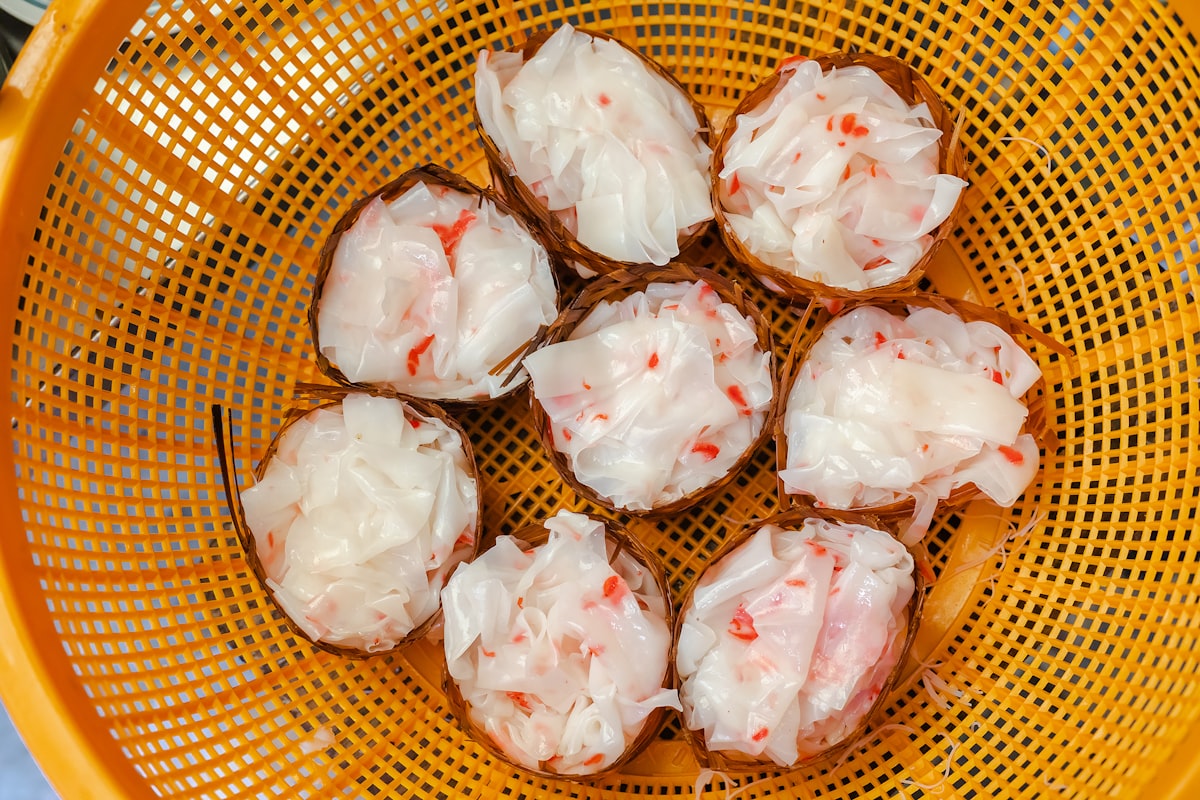
The stall is on a soi, a side lane, off Charoen Krung, one wok, one woman, a plastic stool that puts your knees near your chin. The boat noodles come dark and small, pork and blood broth, and she charges me the same as the man beside me, who drove me here: 80 baht, a bit over 2 dollars. Walk 15 minutes to the riverside terrace with the English menu and the fairy lights and the same bowl of noodles runs 150 to 400 baht, 2 to 5 times the money, by Thailand Knowledge's food figures. Nobody is cheating anyone. You just crossed a line.
That line is the whole story. Thailand is not a cheap country or an expensive one. It is two countries stacked on the same street, and 30 to 50 dollars a day, roughly 1,000 to 1,700 baht at the mid-July market rate of about 33.5 to the dollar, is completely real if you spend your day on the Thai-price side of it. The budget is not about how little you spend. It is about where you stand when you spend it. A backpacking day runs around 1,750 baht by Nomadic Matt's tally, who also puts a bowl of noodles under 100 baht. The same Thailand Knowledge breakdown prices a plain guesthouse at 150 to 400 baht a night and a hawker plate at 40 to 120; a single Bangkok Skytrain ride is 17 to 65 baht on the BTS's own distance-based fares. Move like that and the money barely moves.
The tourist-price side is where it leaks. The beach-strip restaurant. The taxi that will not run the meter, when a fixed-price ride on Grab, the region's ride-hailing app, runs 80 to 200 baht across Bangkok with the number set before you get in. The activity that quietly carries a foreigner rate. None of it is a scam. It is a menu written for someone who did not read this far.
The flat ATM fee, and the room inside it
Then there are the fees that reward a little planning on your part. Every Thai bank charges a foreign card a flat fee per ATM withdrawal, long a standard 220 baht and, by the 2026 fee trackers, now more often 250 on Visa and 350 on Mastercard. Flat is the key word: pulling 20,000 baht costs the same fee as pulling 3,000, so pull the maximum and pull it rarely. AEON's machines still charge about 150 whatever the card, capped near 20,000 a pull. And always decline the offer to bill you in dollars; take the baht rate.
Two more that pay for themselves. On accommodation, Agoda, which like Booking.com is owned by Booking Holdings, is where travelers often find Thailand's small hotels and guesthouses listed a little cheaper; the two pull different rates from the same properties, so compare the final totals, and note that Agoda may add tax at checkout while Booking tends to show it up front. And where you go bends the whole budget: Chiang Mai runs noticeably cheaper than the islands, where nearly everything has to arrive by boat.
The park gate is not ripping you off
One split confuses people every week, so budget for it and let it go. At the national parks, foreigners pay several times the Thai rate: at Khao Yai a Thai adult pays 40 baht and a foreign adult pays 400, by the park's published fee schedule, 10 times as much, while the Similan and Surin marine parks top out at 500. This is not a tout. It is a fixed rate the Department of National Parks sets for each park, in place since 2022, with the money aimed at the upkeep of the place you came to see. Put the farang rate, what foreigners are charged, in the plan and it stops stinging.
So do not chase the cheapest Thailand. Chase the Thai-price one, which is also, not by accident, the better-tasting one. The whole budget comes down to a question you can ask at every counter, gate, and taxi window: am I paying what the person next to me pays, or a price written for someone who just landed? Stay on the first side and 30 dollars a day is plenty. Cross to the second and no number ever is.