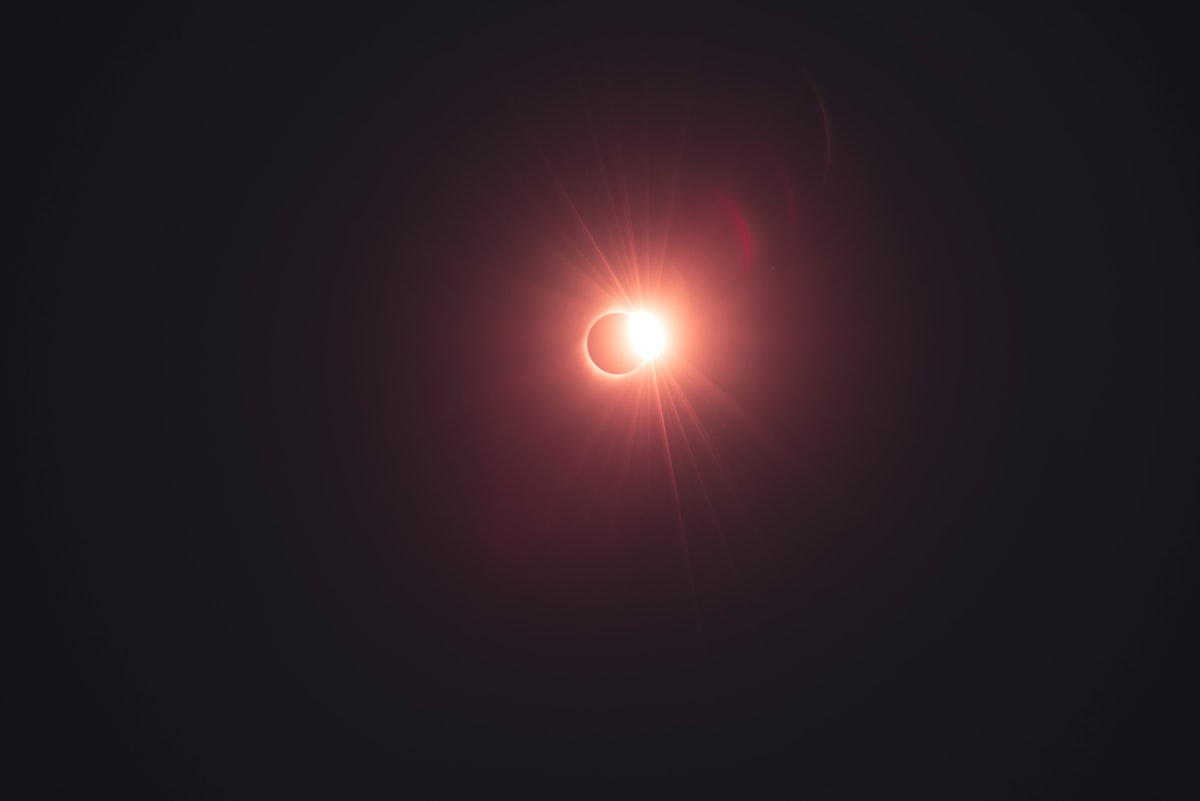
On August 12 the Moon's shadow crosses northern Spain for the first time since 1905, and the first anywhere on mainland Europe since 1999. Amadeus says flight bookings into airports along the path are up 25 percent year on year for arrivals between August 7 and 12. The standout is Bilbao, up 366 percent, with Asturias up 292 percent. People are buying the airport, not the eclipse.
Bilbao has a real international airport, so the flights land there and the frenzy follows. But the city sits at the outer rim of the band of totality. It gets about 29 seconds of the total phase by nationaleclipse's reckoning, and closer to 33 by timeanddate's, the gap being the point: Bilbao sits right on the edge, where a couple of kilometers changes the answer. Drive to Oviedo, the Asturias centerline, and you get 1 minute 48 seconds, nearly four times as long. That is the whole difference between the two spikes: Bilbao has the runway, Asturias has the eclipse.
Now the part nobody selling you a room mentions. The northern coast, Bilbao and Oviedo and A Coruña, is the cloudiest stretch on the entire Spanish track, roughly 60 percent cloud cover in August, by the eclipse climatology Jay Anderson keeps at Eclipsophile. Moisture off the Bay of Biscay piles up against the mountains right where the long totality is. The reliable sky is inland, in the Ebro valley around Zaragoza and Huesca, where August cloud climatology drops below 30 percent in the rain shadow of those same mountains. Zaragoza gets 1 minute 24 seconds, at 20:29 local time. Shorter than Asturias, but you are far likelier to actually see it.
The second catch is the one that ruins low-Sun eclipses. It happens around 20:27 on the coast, about an hour before sunset, so the Sun sits low: roughly 10 to 12 degrees up on the north coast, falling to 2 to 4 degrees by the Balearics (timeanddate has the contact times city by city). At that angle you are looking through hundreds of kilometers of atmosphere, and a ridge, a stand of trees, or a distant storm you cannot see can sit right on the Sun. You need a clean, open horizon to the west-northwest. A room with a view is worth nothing here; a field is worth everything.
So the map, plainly. Skip the coast unless you are lucky with the forecast. Base inland, on the meseta, Spain's central plateau, or in the Ebro valley, where the odds are 70 to 85 percent clear. Book something refundable, because the path is about 290 kilometers wide, so on the day you drive toward the clear line, not sit under your booking. Check AEMET, Spain's national weather service, in the final week; everything above is climatology, not a promise. And carry certified ISO 12312-2 glasses for every second except totality itself. Madrid and Barcelona, note, are outside the path and see only a partial.
Prices have already gone where you would expect. Travelers Today reports rooms in Palencia, on the centerline, quoted at 1,095 euros a night, more than ten times the normal August rate, and Idealista has rural rentals up 830 percent. Iceland gets it first, and gets it easier: in Reykjavik the total phase runs 59 seconds in the late afternoon, just before 6 p.m., with the Sun some two dozen degrees up instead of Spain's near-horizon Sun, so the horizon problem largely goes away. Either way, book the sky, not the city. If you booked Bilbao for the runway, at least point the car south the night before.