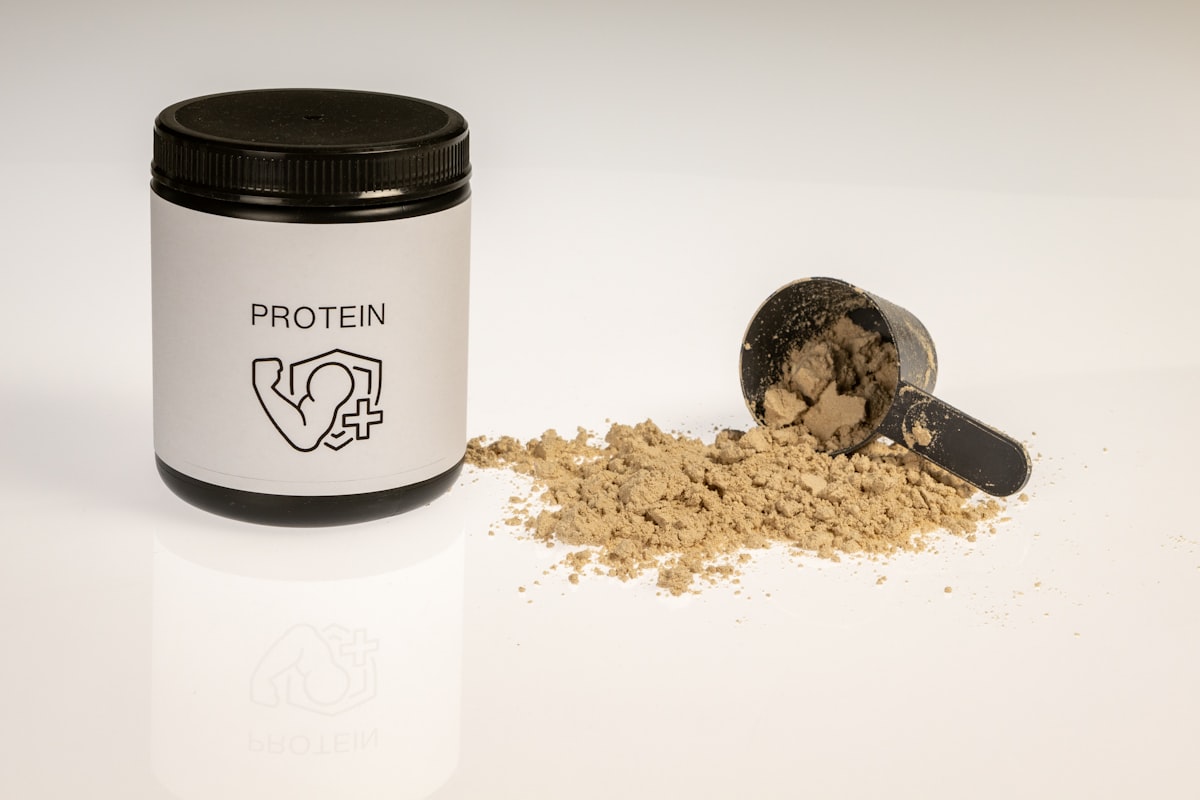
There is a bottle on the shelf that says "fast-absorbing whey for the anabolic window" and, two aisles over, a tub of "slow-release night-time casein." Same protein, roughly. Different clock. You are being sold time.
So it is worth reading a trial that put the clock on trial. Klemp and colleagues, published in 2025 in the Journal of the International Society of Sports Nutrition, took thirty untrained men aged 60 to 75 and had them lift twice a week for twelve weeks. One group drank 40 grams of protein right after training. One group drank the same 40 grams 30 minutes before sleep. The third group just trained and skipped the shake. Everyone was already eating at least 1.0 gram of protein per kilogram of body weight a day, which is to say, enough.
Everyone got stronger. Leg press went up by about 28 kilograms, chest press by about 11, and the quadriceps thickened by a couple of millimeters on ultrasound, all of it real, not noise. And between the three groups there was no difference. Not a smaller one. No difference at all. The post-workout shake and the bedtime shake bought these men nothing that training and adequate protein had not already bought them.
Underline one detail: this trial was part-funded by the ISSN and Dymatize, a protein-supplement brand. A study part-paid by a protein-powder company still could not find the effect the powder is sold on.
Thirty men, one sex, one age band, twelve weeks. I am not going to pretend this settles the science for a 25-year-old competitive lifter, because it does not, and the sellers will tell you so. This is one small trial in older, untrained beginners, the kind who gain from almost any nudge. What it shows is narrow and honest: in this group, with daily protein already adequate, the clock added nothing.
This is not a new result so much as a stubborn one. Back in 2013, Schoenfeld, Aragon and Krieger pooled twenty-three studies of muscle growth and found that once you account for how much protein people eat in a day, the "narrow post-workout window" disappears. That finding is more than a decade old now. The supplement labels have not caught up.
And the bedtime casein? Its best evidence, a systematic review of the pre-sleep-protein trials, rests on studies that mostly compared protein before sleep against a placebo of nothing. So it measured more total protein, not better timing. When a 2023 trial finally pitted slow casein against fast whey overnight, the casein was not special. The "slow protein for the night" story lost its one selling point in its own laboratory.
Here is the receipt. Total daily protein is cheap and comes from food. Showing up to train twice a week is free. The 30-minute window and the fast-versus-slow ritual are the upsell laid over the top, and the trials keep failing to find the thing you are paying for.
Eat enough. Lift something heavy, regularly. Then stop watching the clock. It is not measuring you. It is measuring how long you will keep buying.