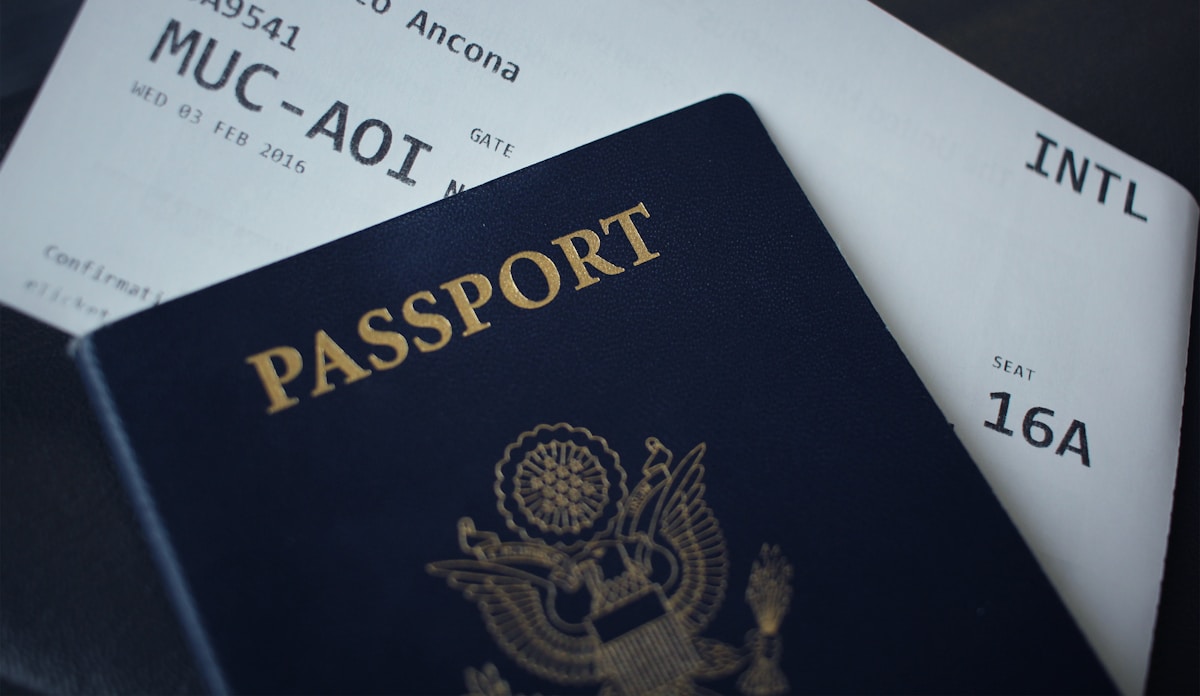
The checkout screen for a Ghana e-visa now asks for 260 dollars before it asks for your travel dates. That is the single-entry tourist fee on the national e-visa portal Ghana launched in May 2026, and it is not a scam site or a middleman markup. It is the government's own price, listed by the Ghana Immigration Service, with faster processing costing more, up to 442 dollars if you want it in five hours. A multiple-entry visa runs to 468 dollars and beyond. The fee applies to most non-African passports, and Americans, who are Ghana's largest group of visitors, are squarely among those paying it.
A recent Euronews tally of the priciest tourist visas ranked Ghana at the top of the one-time fees, and the number is real. But any such ranking depends on the passport in your hand, and it flattens three very different charges into one column. A visa fee is paid once to get in. A per-night levy is paid every day you stay. A departure tax is paid on the way out. Lump them together and you get a list. Keep them apart, and read them against your own nationality, and you get the thing a traveler actually needs, which is what a trip will cost and why.
Bhutan is the clearest case. It is the most expensive country on this list to actually visit, but almost none of that is the visa, which is a flat 40 dollars once. The weight is the Sustainable Development Fee, 100 dollars per person per night, paid to the government for every night you are in the country, on top of your hotel, your meals, and your mandatory guide. A week is 700 dollars in fee alone, plus the 40, and that 740 rivals what many travelers pay for the flight. Here is the honest shape of it against the visas people call expensive.
Now the part the headline promises, which is who is quietly raising these. A fee is also a filter, and the ranking tells you less than the list of who is exempt from it. Ghana is the obvious hike. Its old embassy tourist visa sat in the range of 60 to 110 dollars; the new e-visa is 260, a jump the country made in a single administrative move. The United States is another. The ESTA authorization that visa-waiver travelers buy, which is not a visa but a permission to board, went from 21 dollars to 40 on the last day of September 2025, then to 40.27 with a January inflation adjustment. A separate 250-dollar visa integrity fee was signed into law in July 2025 for people who need an actual US visa, though it exempts ESTA users and, as of this writing, is not yet being collected. Japan raised its short-term tourist visa fivefold on July 1, 2026, from 3,000 yen to 15,000, the first change since 1978.
But be careful with Japan, because this is exactly where the sticker-price ranking misleads. That 15,000-yen visa is not paid by travelers from the roughly 70 jurisdictions Japan admits visa-free for short stays, a list that includes every EU state, the United States, Canada, South Korea, Taiwan, Singapore, and Thailand. That hike lands on the travelers who still need a visa, more than 70 percent of whom, by the foreign ministry's own count, are Chinese. What a visa-free tourist actually pays in Japan is the departure tax, which tripled from 1,000 yen to 3,000 on the same July date and comes bundled invisibly into the airfare. Two different fees, two different populations, one column in the ranking.
Which is why the most interesting countries on the list are the ones going the other way. Bhutan's 100-dollar fee is not a hike at all. It was 200 dollars a night as recently as June 2022, and the government cut it in half in 2023 as a deliberate incentive to bring visitors back, a discount now extended through August 2027. Ethiopia trimmed its tourist e-visa from 82 dollars to 62 in the same spirit. The most expensive place to visit made itself cheaper. Follow the fee and you can usually see whom a country is pricing for. Bhutan's levy drops to about 14 dollars a night for its Indian, Bangladeshi, and Maldivian neighbors. Ghana's 260 dollars vanishes entirely for African passport holders, who now enter free. Japan's hike spares the passports it already waves through and falls on the neighbors who still need a visa to come.
So the practical advice is duller than the ranking and more useful. Read the fee, not the headline. Ask whether it is charged once, per night, or on exit, because a 260-dollar visa barely registers on a two-week trip and a 100-dollar-a-night levy does not. Check your own passport against the country's exemption list before you assume the worst number applies to you, because it often does not. And book on the government's own portal, never the lookalike sites that sit above it in search results, charging a markup to fill in a form the government offers for less, or for free. The visa is expensive enough without paying a stranger to click submit.