There is a moment in the Douro, sometime between the end of summer and the start of autumn, when a granite trough fills with dark grapes and a line of people climb in barefoot, link arms, and begin to march. Someone sets the rhythm with a song. This is the pisa, the foot-treading, and Turismo de Portugal calls the vindima that surrounds it one of the oldest and most genuine wine activities in the country. What the tourist board does not say, because it is selling you a feeling, is that the only reason you are allowed in that lagar is labor the region has never fully handed to machines.
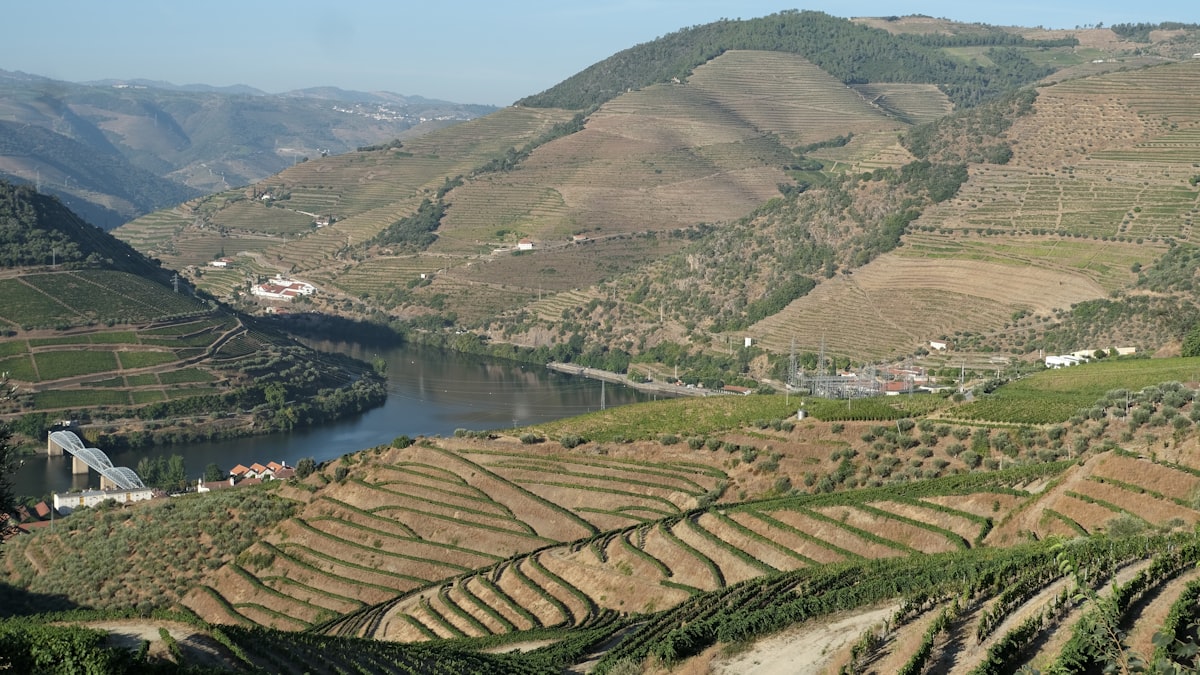
Here is the thing most harvest brochures skip. The Douro's vineyards climb the valley in socalcos, narrow stone-walled terraces cut into schist so steep a machine cannot reach most of them. So the grapes come off by hand, the way they have across much of the two thousand years UNESCO says wine has been made in the Alto Douro, in heavy baskets carried up the slope on a picker's back. This is one of the very few great wine regions on earth where the harvest still runs on people, and that structural fact, not nostalgia, is what leaves room for a paying stranger to help. The foot-treading survives for a related reason: bare feet break the skins without crushing the bitter seeds and stems, which is still how the best Vintage Port begins.
So how do you actually do it. You book a quinta, a wine estate, and most of the working ones around the Douro's hub town of Peso da Regua run some version of the day. Quinta do Vallado, which dates itself to 1716, advertises a harvest kit (scissors, a bucket, a hat, a shirt) and a morning in the vines before lunch and a tasting. Quinta da Pacheca, across the river toward Lamego, offers a guided visit and tasting that ends in the lagar, where its own materials say you tread grapes alongside the crew before a glass of Port; dinner is an option. Quinta do Tedo runs a hands-on day, picking and then lunch alongside the grape pickers themselves, which is the part I would not skip. As of the 2026 season, estates and operators list roughly 50 euros for a half-day of picking, up to 200 and more for a full day with lunch, a tasting, and a river cruise; the multi-day stays cost about what a good hotel costs.
Now the honest part, because I came up in kitchens and I know the difference between working a service and playing at one. Your hour in the vines is a rounding error against what the crew does from first light. Your feet in the lagar are ceremony, not production. That is fine, as long as you know it, and the better estates are straight with you about it. What you are buying is not the wine you made, a bottle or two at most from the ones that let you take some home, but the education of your own back and hands, the only way I know to stop treating a bottle as a thing that simply appears.
Two cautions the marketing glosses. First, nobody can promise you a date. Turismo de Portugal confirms the ritual but not the calendar; picking starts when the grapes are ready, which a warming climate has made a moving target, and it stops dead on a rainy day. Book a window in late September, stay several days, and treat any exact date a tour operator quotes as a hopeful guess. Second, the standard "book four months ahead" line is operator advice, not gospel, though the same operators say September fills faster than any other month in the Portuguese calendar, so the estate you want may already be full. Aim early, arrive loose, and let the grapes set the schedule. They always have.