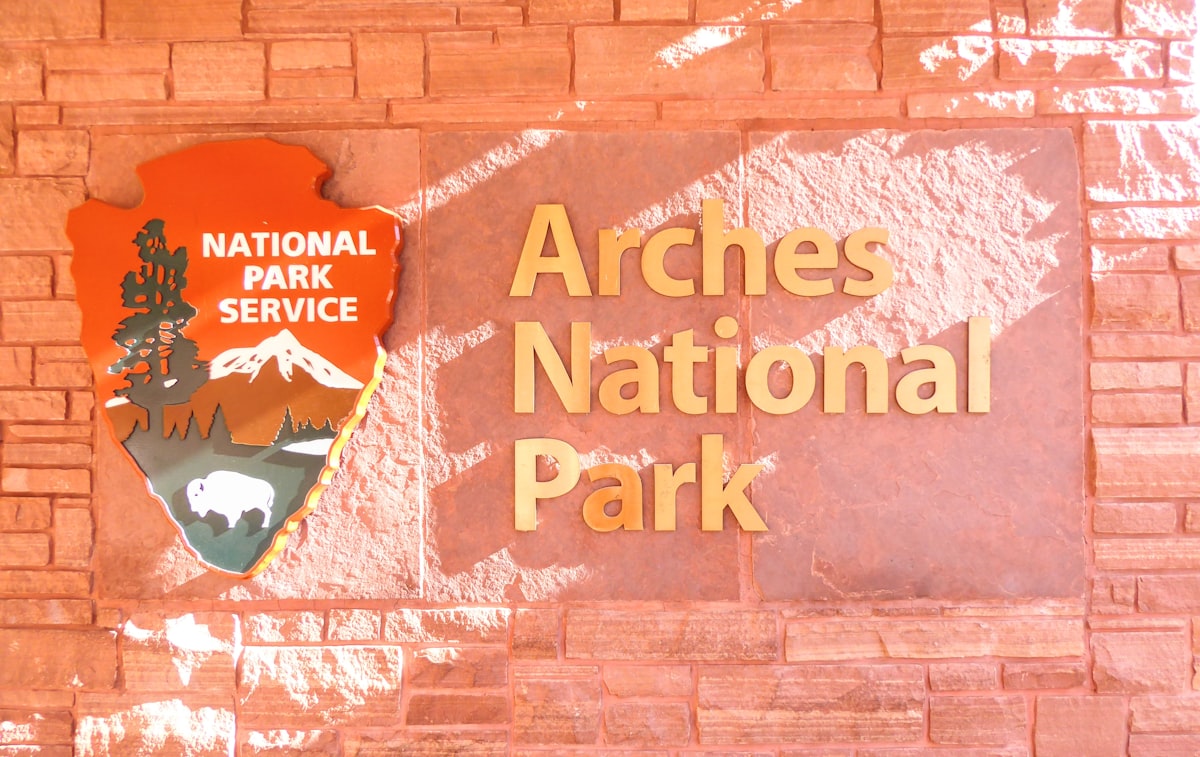
At the Yellowstone gate, a ranger now has to ask where you live before waving you through. Since January 1, every visitor who is not a US resident and is at least 16 pays a flat $100 a head on top of the standard entrance fee, which at most of these parks runs about $35 a vehicle. A foreign couple driving in owes that $35 plus $200 more. The rangers were handed this five weeks before it took effect, and told to verify residency by eye, by passport, by postal code. That is the part nobody planned for: the checkpoint the fee quietly installs at the mouth of a public park.
The surcharge hits 11 of the busiest parks, the postcard ones: Yosemite, Grand Canyon, Yellowstone, Zion, Grand Teton, Glacier, Rocky Mountain, Acadia, Everglades, Bryce Canyon, and Sequoia and Kings Canyon. Together they drew nearly 39 million recreation visits in 2024, by the Park Service's count. The America the Beautiful annual pass, $80 for everyone until this year, now splits: still $80 for residents, $250 for everyone else, and it waives both the entrance fee and the surcharge. It also covers a vehicle of up to four adults. It traces to Executive Order 14314, signed last July under the exact title "Making America Beautiful Again by Improving Our National Parks." Interior projected it would raise more than $90 million, and the department calls it "America-first" pricing.
I should be the last person to object to a two-tier price. I have defended dual pricing in Thailand for years, and Japan's own version, Himeji Castle charging foreigners more, runs in a companion piece I am also writing. A resident subsidy at a public site is a fair idea. But look at what this one is bundled with. A separate move, Interior's 2026 fee-free calendar, dropped five free days, among them Martin Luther King Jr. Day, Juneteenth (the holiday marking the end of slavery in the US), and National Public Lands Day, and added several new ones, among them Flag Day, June 14, which is also the president's birthday. The Park Service's own list runs to ten days now, up from six, so this is not a cut in access; what changed is which days, and the two with civil-rights weight are the ones I notice leaving. The redesigned resident pass, meanwhile, drops the contest-winning Glacier photo that a lawsuit says the law requires and prints the president's face, alongside George Washington, instead; the Glacier image was shunted onto the nonresident pass, and the Center for Biological Diversity sued in December, arguing the design violates the Federal Lands Recreation Enhancement Act of 2004. That is not conservation math.
Follow the money out the gate, and it lands in the towns. Foreign visitors stay longer and spend more, on lodges, guides, the diner, the outfitter. Around Bryce Canyon, KUER reports, local operators put international travelers at close to 70 percent of area visitation and say they spend about 40 percent more than domestic ones. Those are gateway-industry estimates, not Park Service figures, but the direction is not in doubt. Bryce just posted its lowest attendance since 2015 outside the pandemic, down 21 percent. Intrepid Travel's Leigh Barnes told Travel Weekly the operator's 2026 forward bookings for US park tours are down 42 percent, with Canadian bookings off 86 percent, even as its US bookings rose 7 percent.
The honest caveat is that the fee cannot be blamed for all of this. Inbound travel was already falling before the surcharge existed, on tariffs, the "51st state" annexation talk, and a Canadian boycott, and forward bookings measure sentiment, not receipts. What the $100 does is land on top of a decline already under way. No one can isolate the fee's share, and for the towns it hardly matters which cause did it; they are exposed either way. The system still fills up, more than 323 million recreation visits last year even through a record-long government shutdown, because Americans keep coming. They do not fill the hotel ledgers the way foreign visitors do. Measure the crowd, not the cash, and you will miss it.
So the traveler's move is dull and worth making early. If you are seeing two or more of the 11 parks, or traveling as a carful of adults, buy the $250 nonresident pass before you leave home and carry your passport for the gate; a single park on your own, and you are better off paying on arrival. That is the practical part. The other part is harder to price. Stapled to a birthday holiday, a headshot, and a $250 visa fee and a proposed five years of social-media screening behind it, the surcharge tells a foreign visitor something the budget line never intended to say, which is that the welcome now has a nationality test. Inbound arrivals had fallen 5.5 percent by the government's own count the year before this all began. A price on the passport was never going to read as hospitality.