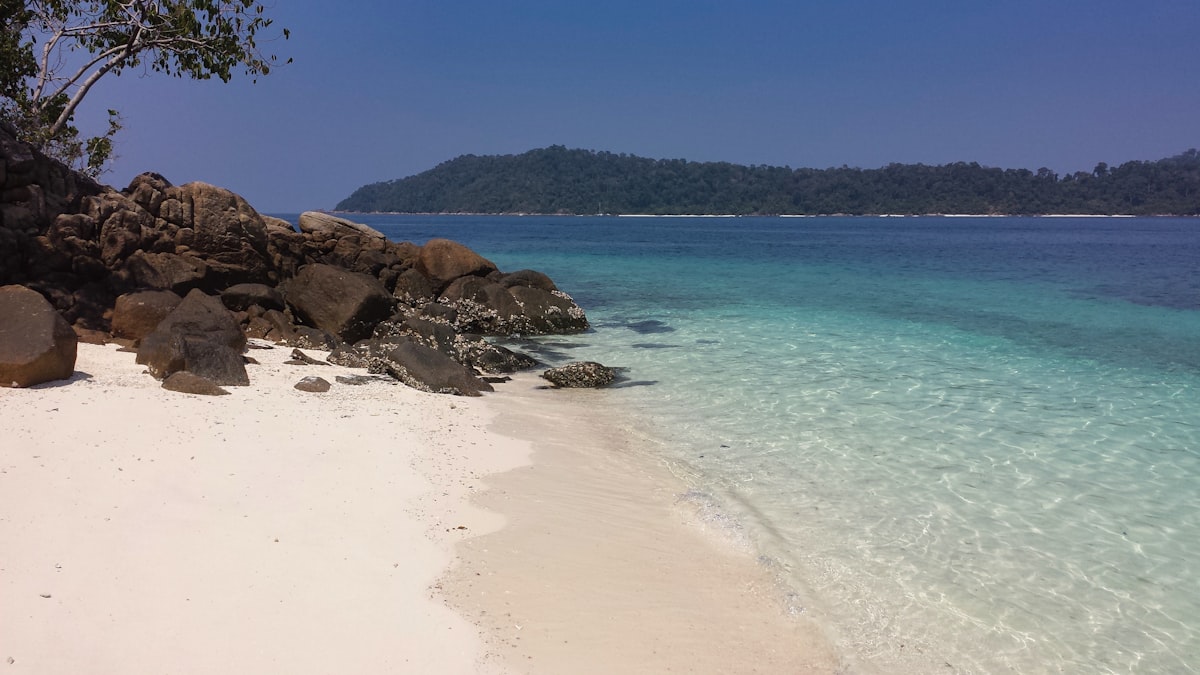
In February, Nomadic Matt published the rarest thing in travel writing: a post telling you not to go somewhere. He had loved Ko Lipe in 2006 and came back nineteen years later to find its dirt footpaths "paved over," the island run on what he calls "the Ko Phi Phi model of tourism." The coral, he writes, "is dying, a victim of all the boats, anchors, pollution, and overfishing." His verdict is blunt: "A visit there will only make things worse." He did not call for a boycott; he redirected readers to Ko Lanta, Ko Jum, and Ko Mook, an island swap, not a picket line.
The instinct his post stirs, though, runs harder than his own tidy swap: the urge to withhold your money and not reward a place for what it has become. That is what I want to test, because I trust the anti-recommendation more than almost any other kind of travel writing. It has nothing to sell. But honesty about a place and a useful instruction for a reader are not the same thing, and Ko Lipe is where the two come apart.
Start with the coral, because it is the easiest to get wrong. The reefs around Ko Lipe are dying, but not mainly because of who books a bungalow. They sit inside Mu Ko Tarutao, Thailand's first marine national park, and in 2024, Khaosod English reported, the Department of National Parks recorded bleaching across 11 Andaman marine-park areas, Tarutao among them, part of a global bleaching event, the most widespread yet documented. A coast-to-coast reef assessment, reported by Mongabay this January, found Thai reefs going structurally simpler, the branching corals that shelter fish showing up less and less. That is sea-surface temperature, not your footprint; boycotting the island does nothing for it. The local damage Matt names, anchors and sewage and plastic, is real, but it is a management failure, a question of moorings and a wastewater plant, not of headcount.
Then there is the line he almost passes over: "The island's boom has displaced many locals, who were forced to sell to mainland developers." He does not name them. They are the Urak Lawoi, the chao lay, the sea people who settled the Butang archipelago more than a century ago and are Ko Lipe's first inhabitants, by the most-cited count roughly 1,200 today. They were displaced twice. First by conservation: when Thailand drew Tarutao around them in the mid-1970s, they became encroachers on their own water and were herded onto Ko Lipe. Then by tourism. Most never held a Sor Kor 1 or Nor Sor 3 land document, so investors bought cheap under threat of the park, and deeds inflated on paper; the Bangkok Post tracked deeds swelling well beyond the land they were first written for. The same paper documented how the beach itself was taken: families who trusted the son-in-law of their village leader to upgrade their deeds learned only after his murder that it was a hoax, and outsiders arrived with documents and built resorts. By 2022, the Post reported, about 125 families, half the community, had lost legal title. That December, as the Manushya Foundation documented, resort owners fenced off the public path to the sea, the school, and the hospital until the coverage shamed them into reopening it.
This is the part a boycott cannot reach. The Urak Lawoi were dispossessed for the resort economy, not enriched by it, and much of the island's workforce, Matt notes, now comes from the mainland. Stay away and the inflated deed still holds; you thin the island's economy without touching the landlord who took the beach. The land question is decided in a land office and a courtroom, not by your booking. So the useful instruction is not "do not go." It is: ask who owns the beach, and whether they are the people who were standing on it first. That question travels better than any island swap.