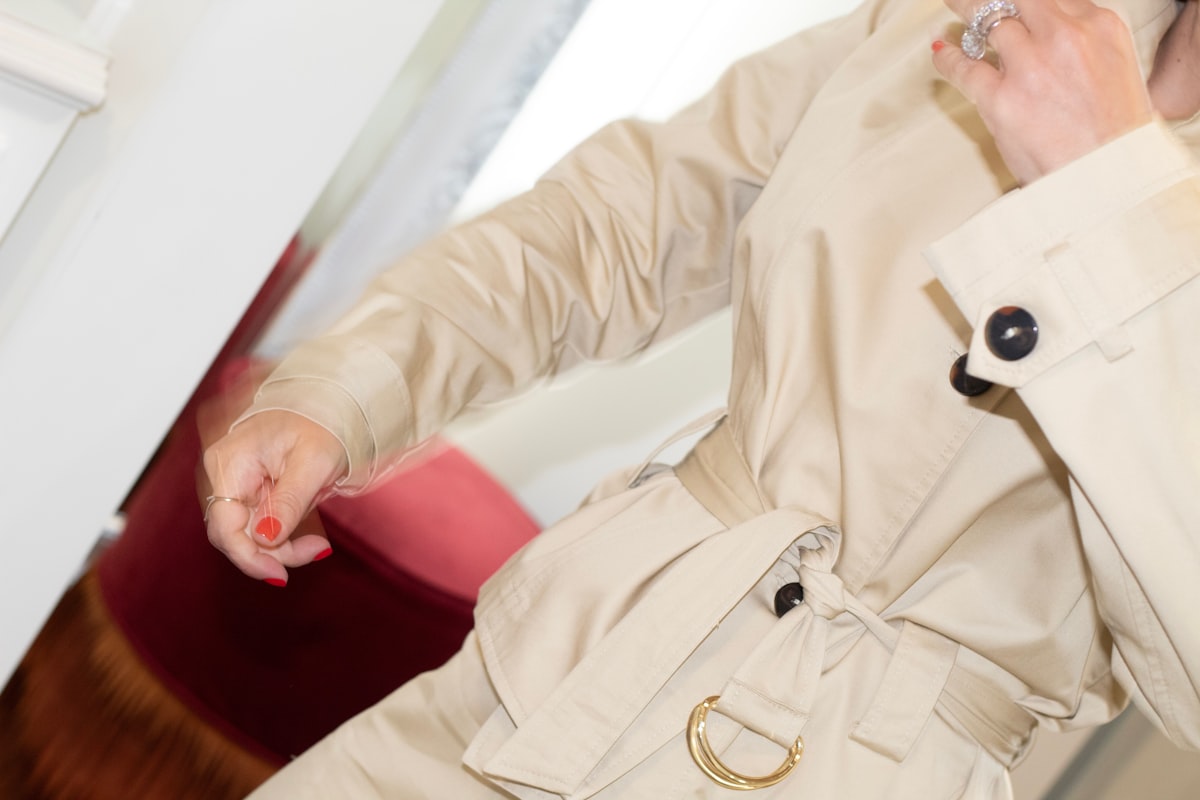
Turn a trench coat inside out and you learn quickly whether a house means it. The storm flap that actually sheds water, the D-ring belt that was there for a soldier's kit, the raglan sleeve cut so an arm can move: it is a garment that solved a problem before it became a logo. For most of the last decade Burberry seemed to have forgotten this. It chased handbags, chased a narrow high-fashion silhouette, chased the monogram, and in September 2024 it fell out of the FTSE 100. The coat sat there the whole time, saying nothing, being right.
On July 17 Burberry reported that in the first quarter of its 2026-27 fiscal year, the 13 weeks to June 27, its retail revenue rose 5 percent to £455 million, with comparable sales also up 5 percent against a 1 percent decline a year earlier. It was the fourth straight quarter of growth. More telling than the headline: for the first time in three years, womenswear, menswear, accessories and childrenswear all grew at once, and outerwear grew in double digits. The thing the house actually owns pulled everything else up behind it.
To my eye this is the strongest sign yet that Josh Schulman's back-to-heritage bet is paying. Schulman, who arrived from Coach and Michael Kors in July 2024, spent his first year doing something unfashionable in a logomania industry: he put the coat back at the center, raised prices where Burberry has real authority, and trimmed the entry-level noise. Burberry credits its "Portraits of an Icon" trench campaign, which ran earlier this year, with a 19 percent rise in new rainwear customers. You cannot manufacture that with a marketing line. People bought a coat because they wanted the coat.
The geography tells its own story. The Americas led at 12 percent, Greater China rebounded to 9 percent after falling 5 percent a year ago, and Asia Pacific rose 3 percent, held back by a 2 percent dip in Japan. Europe, the Middle East, India and Africa slipped 3 percent, dragged by the Middle East; strip that out and it was down 1 percent.
I am wary of turnaround stories, because houses are fluent in describing momentum they do not have. So look at what is under the lining here. The full-year results in May had already shown adjusted operating profit climb to £160 million from £26 million; Burberry rejoined the FTSE 100 last September, and the roughly 1,700 jobs went earlier under Burberry Forward. The cost discipline holds too: the Q1 update reports £80 million taken out last year and £100 million targeted by year-end, alongside Gen Z arriving in double digits, by the company's account, and an eighth consecutive quarter of e-commerce growth. This is not a press release you can wear. It is a coat people are wearing.
And yet the market sold the shares off almost 5 percent on the day, because Q1 did not accelerate past the 5 percent Burberry already posted in Q4. That impatience is the real risk. Burberry still sits in the squeezed middle of accessible luxury, priced out from above and undercut on design from below, with Moncler and Barbour circling the category I would argue it has real authority in, outerwear. Rebuilding a heritage house is a five-year job, not a four-quarter one. But the direction is finally honest. Burberry stopped selling the promise and went back to selling the thing that keeps the rain off.