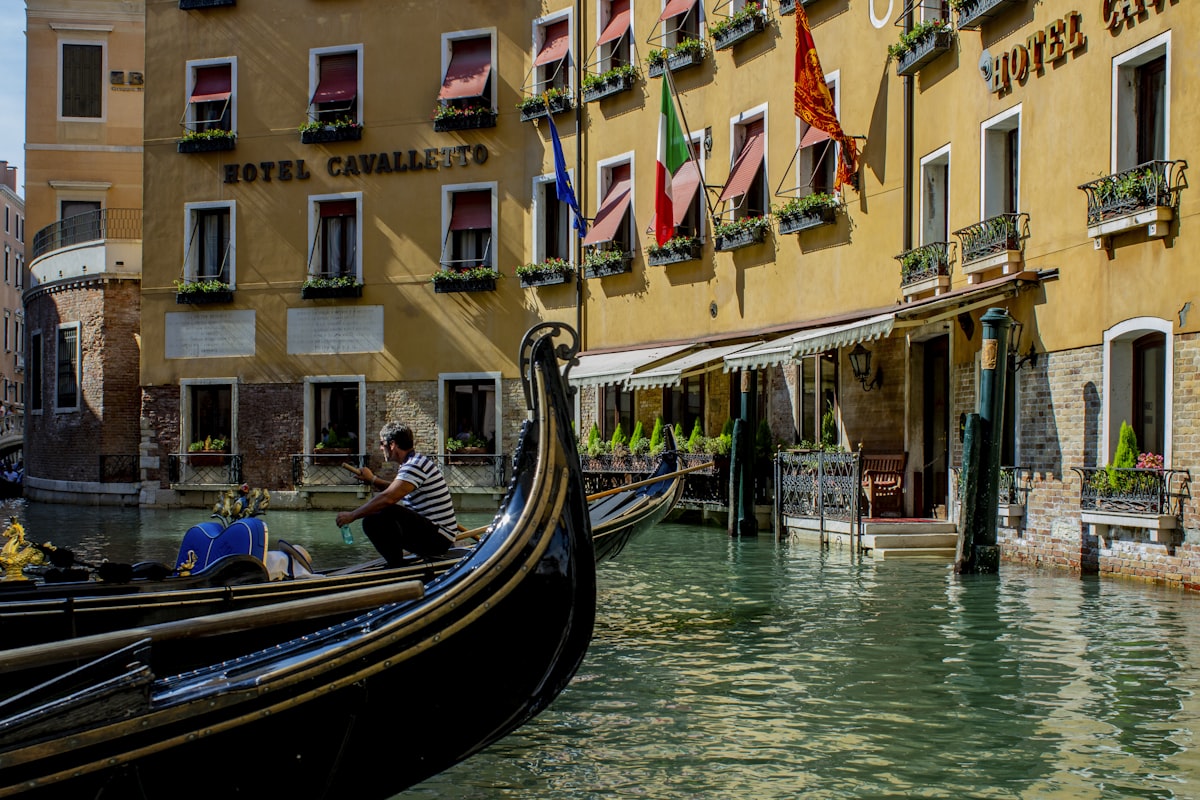
The Danieli stands on the Riva degli Schiavoni in Venice, where it has been a hotel since 1822, when a man named Giuseppe Dal Niel rented the second floor of a Gothic palace and hung his own softened name over the door. The palace was already four centuries old by then. It belonged to the Dandolo family, who gave Venice four of its doges. This August the building reopens as a Four Seasons after a three-year restoration, rooms running from about a thousand dollars a night in winter to twice that in summer, and you can already book a stay from August 26. A reader who saves for it can have it.
What that reader is buying, though, is a palace that has agreed to behave like a hotel. That is the pattern worth watching in the 2026 openings, more than any single address: a landmark stops being what it was and becomes rooms. The lists call it a restoration. The trade calls it adaptive reuse, and there is a lot of it about; Lodging Econometrics counts 2,041 renovation and conversion projects in the pipeline, and much of the year's marquee supply is old buildings changing use rather than new ground broken.
Read the year that way and the buildings tell you more than the brands. Rosewood is due to open in Rome in 2026 inside the former head office of Banca Nazionale del Lavoro on the Via Veneto, its spa built down in the old bank vault where the money used to sit; April was reported, though the date stays soft. In Kyoto, Capella opened in March on the site of a century-old elementary school in the Miyagawa-cho geisha district, with reclaimed timber from the old classroom floors running the length of a bar counter and the school's original pendant lamps hung above it. In London, the Waldorf Astoria is due to open later in 2026 inside Admiralty Arch, the Edwardian sweep King Edward VII raised in memory of Queen Victoria, later a wartime intelligence office and a government seat, though overnight stays are reportedly not bookable until early 2027. In Lisbon, Six Senses is folding a seventeenth-century palace and its eighteenth-century neighbor, once owned by the postal service, into one hotel reportedly late in 2026.
The clearest verdict came from the one owner who declined. Louis Vuitton was reported to be planning a hotel in a Belle Epoque building on the Champs-Elysees, where the spy Mata Hari was arrested in 1917. Presenting the group's annual results in late January, its chairman Bernard Arnault ruled it out: diversification, he said, was not really the priority for a brand with an already wide range of products, and "Vuitton has no plans to build a hotel." So that landmark becomes a store instead. Someone did the sum and found the address worth more selling handbags than beds.
I am the wrong person to complain; I have loved a good many buildings for what happened in them before I arrived. But a bank, a school, an admiralty each meant something specific once, and each now does the same thing every restored landmark does, which is hold a bed, a spa, and a tasting menu. If you want one you can actually sleep in this year, Kyoto is open and Venice takes the booking. The rest are still finishing the business of becoming something else.