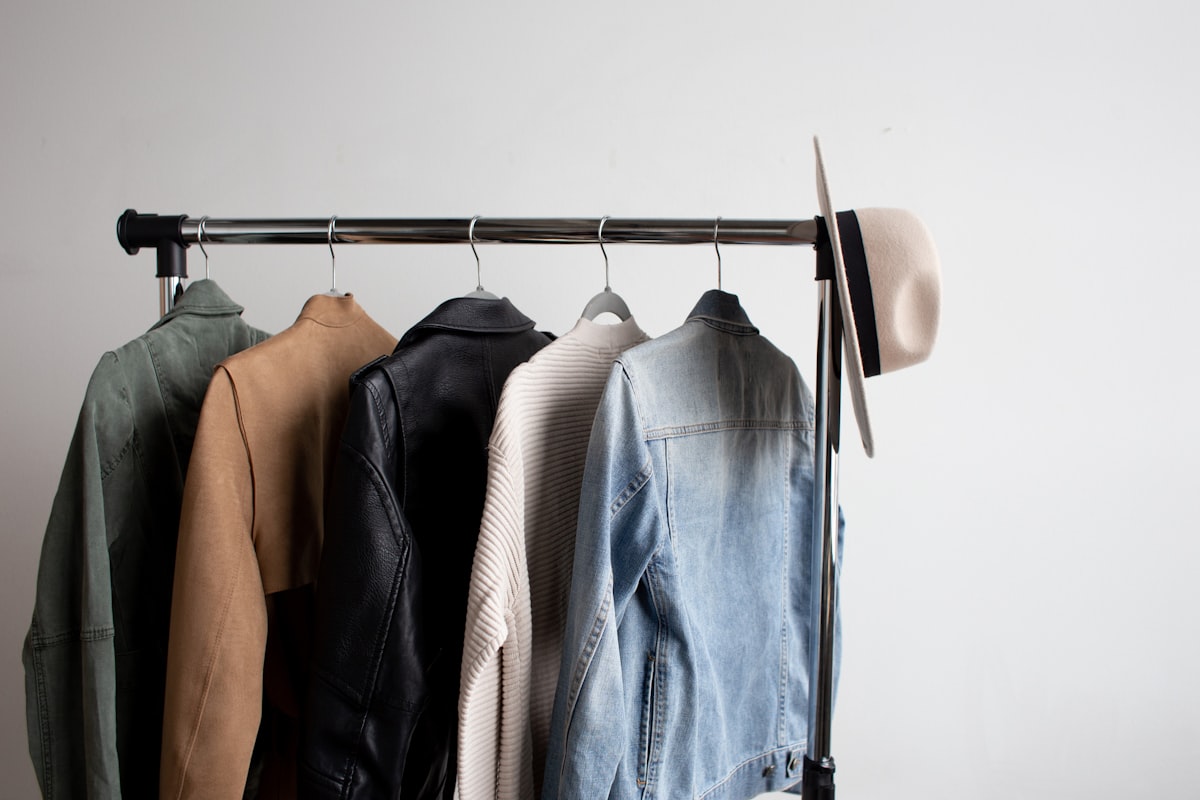
The Sunday I understood the numbers, I was standing at Mauerpark, a Berlin flea market, a little after eight with my hands wrapped around a coffee I did not want, watching two men in matching fleece vests work a rail of coats faster than the woman who owned the stall could hang them. They were not shopping. They were sourcing, the resellers everyone at the markets calls flippers. Phone out, thumb the label, check the resale comparison, into the crate. By nine they had cleared the good wool and moved on, and the rest of us picked over what an algorithm had already decided was worthless.
I have written about used clothes for eight years, mostly cheerfully, so I read ThredUp's fourteenth annual resale report the way I read all of them, expecting the usual triumphant curve. The headline is real and it is large: the company projects the global secondhand apparel market will hit $393 billion by 2030, growing twice as fast as the rest of the fashion industry, while new clothing sales stayed nearly flat in 2025. In the United States, the report says resale grew nearly four times faster than the broader retail clothing market. Fine. Resale is winning. I did not need a report to tell me that.
The interesting line is buried, and here it is: demand is no longer the problem. Supply is. ThredUp says so in its own top-ten list, in plain type, as theme five: supply, not demand, is the primary constraint. The company spent a decade convincing you to buy used, and it worked. By its own count, nearly 60 percent of American consumers bought secondhand last year, and 62 percent of Gen Z. What is running short now is not shoppers. It is clothes worth selling to them.
Read that twice, because it turns the story inside out. For years the moral of thrifting was restraint: buy less, buy used, take the strain off a planet drowning in polyester. Now the industry's own constraint is the opposite. It cannot find enough decent used garments to feed the demand it built. James Reinhart, ThredUp's cofounder and chief executive, said it in the report's own announcement: the next phase will be defined by who can best unlock supply. Unlock supply. That is a resale platform saying, in public, that its growth problem is your closet not emptying fast enough.
Here is where I have to be honest about who is talking. ThredUp sells resale, so more supply is more revenue, and a report that frames your wardrobe as untapped inventory is not a neutral document. It is a very good one, commissioned from GlobalData off a survey of more than three thousand Americans, but its conclusions point where you would expect. WWD noted the company was the fastest-growing fashion stock of last year, up 354.7 percent. Keep that in view while you read the word "unlock."
And keep the geography in view too, because "running out of supply" is only true if you stand in the right country. There is no global shortage of used clothing. The opposite. The OR Foundation, which has worked in Accra's Kantamanto market for years, counts something like fifteen million secondhand garments arriving there every week, of which roughly forty percent leaves again as waste, burned or dumped (a share the local dealers' association disputes as far too high). The market burned in early January 2025, taking more than half of it and thousands of livelihoods with it. The mountain of castoffs the rich world exports is not shrinking. What is scarce is the narrow, sellable, platform-grade sliver of it: the clean wool coat, the intact label, the piece a pricing model will pay you for. Supply is not short. Supply that turns a profit is short. Those are different sentences.
It is worth asking why the demand is so relentless in the first place, because the reason is duller than the marketing wants it to be. In this year's report, 72 percent of the shoppers surveyed said rising prices are shaping what they spend on clothes (all of them, on clothing in general, not resale in particular), and 27 percent said that pressure is pushing them to buy more secondhand. That is not a sustainability finding. It is a cost-of-living one. It also tracks with everyone I have ever met at a market. Nobody digging through a two-euro crate at a Berlin flea market is doing it to lower their carbon footprint. They are doing it because clothes got expensive and this is where the money goes further. The environmental benefit is real, and it is a side effect, and pretending otherwise just gives fast fashion a nicer story to sell you.
So what do you do with all this, standing at a rail on a cold morning with the flippers already gone. A few things I keep coming back to. The value the report is chasing is sitting in your wardrobe, which is the whole point of the supply squeeze: the stuff you stopped wearing is worth more than you think, and selling it is now easy in a way it was not five years ago. Do it before the moths do. But do not confuse a company's supply problem with a virtue. Buying a fourth secondhand jacket is still buying a fourth jacket. The greenest garment is the one already on your back, mended at the elbow, worn another year.
And look at the seams. That has not changed and it never will. The men in the fleece vests are scanning labels, not construction, and a well-made coat with a boring name will outlast a hyped one every time. Buy it once, or buy it twice. Let the algorithm keep the rest.