The average American spends five hours and sixteen minutes a day looking at a phone, up fourteen percent in a year. That number comes from Harmony Healthcare IT, a health-data firm that surveyed a thousand people about their screen time. The reason I have it is that Eventbrite, a company that sells event tickets over the internet, chose to headline it in a report announcing that Americans are logging off. Sit with the arrangement. The pitch for the offline summer is being delivered online, by a platform whose revenue depends on you buying a ticket through an app.
I do not doubt the hunger. The evidence for it is older and harder than any trend deck. The World Happiness Report, drawing on the American Time Use Survey, found that roughly one in four Americans ate every meal alone on a given day in 2023, up 53 percent since 2003, with the sharpest rise, close to 180 percent, among people under thirty. Jan-Emmanuel De Neve, who runs Oxford's Wellbeing Research Centre, has said that whether people eat alone turns out to be a powerful indicator of how socially connected they are. That is real. People are lonely in measurable ways, and they are right to want out of it.
What I distrust is the packaging. Eventbrite's report, "Welcome to the Offline Summer," says farmers markets on its platform are up eighteen percent so far this year and community gardens up thirteen, with picnics up 215 percent and potlucks up thirty-eight over the previous year. Those are its own platform's listings, not a census of American behavior. A percentage without a denominator is a mood, not a measurement, and growth in the number of farmers-market events sold through one ticketing site partly reflects more organizers using that site. The base is small and recent. Two hundred percent of very little is still not very much.
Then there is the vocabulary. In the report itself, the company's general manager, Andrea Parodi, asks, "When did we stop knowing who lives next door?" and answers that people are "looking for somewhere to belong." It is a good line. It is also a product description. Belonging, in this telling, is something you find by buying a ticket, and the thing being sold back to you is the thing you used to get for free by standing on a porch.
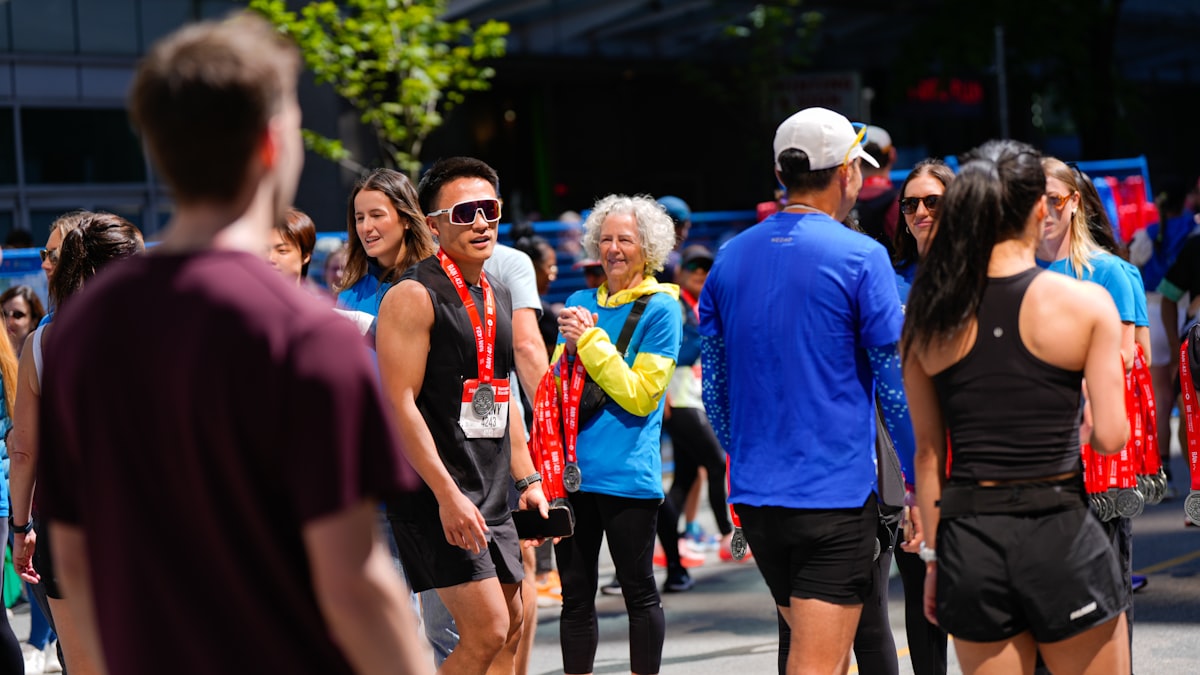
The run club is the clearest case. Strava, itself an app, reported that new clubs on its platform nearly quadrupled in 2025, passing a million total, with running clubs up three and a half times. The headline it chose was "doomscrolling is out, movement is in," a strange thing for a social network built on posting your workouts to say without irony. The clubs are real and the miles are real. But look at who arrived with them. Saucony now partners with Black Girls RUN, Black Men Run, and No Bad Days, and makes custom shoes with some of them. Its brand marketing director, Jordan Yob, told Marketing Brew, "You can't go a day without seeing a couple of the run crews in Brooklyn." The same reporting found Netflix running with New York's Lunge Run Club to promote its show "Nobody Wants This," and the supplement brand Gainful handing out pre-workout and hydration at Lunge's runs. The money is chasing the same young, reachable crowd the dating apps are losing: Match Group, which owns Tinder and Hinge, told the SEC its paying users fell again in the first quarter of 2026, to 13.5 million, a slide that has run for years. The likeliest reason a brand pays for the coffee after a run is unsentimental. A Saturday club is where the 25-to-35 crowd now gathers, sober and reachable, in gear that photographs well. The clubs did not sell out. They were simply where the buyers went.
None of this makes the run club bad. A free Saturday run remains one of the cheapest forms of company a city offers. The question I keep is the one I always keep, which is who the door is actually open to. Strava's own survey, of more than thirty thousand people, found that twenty-seven percent of women and twenty percent of men think run clubs are "only for elites," a perception that skews older. The analog summer has a dress code and a fitness floor, and it costs something to clear both. The farmers market runs dearer than the supermarket. The detox retreat is a market of its own: Research and Markets values the digital-detox retreat business at about 1.5 billion dollars in 2025 and has it growing near twelve percent a year, which is to say that even unplugging has been turned into a thing you purchase.
So here is the shape of it. The loneliness is not invented; the survey data is stubborn and sad. But the retreat from the feed has been discovered, named, and priced by the same companies that own the feed, and it is sold hardest to the people young enough to have grown up owing it their whole social lives. That is not a contradiction anyone is hiding. It is the business model stated plainly: the disease and the cure from the same counter. Go to the potluck, learn the vendors' names, run on Saturday. Just notice, on the way, who is holding the clipboard, and what they are counting.