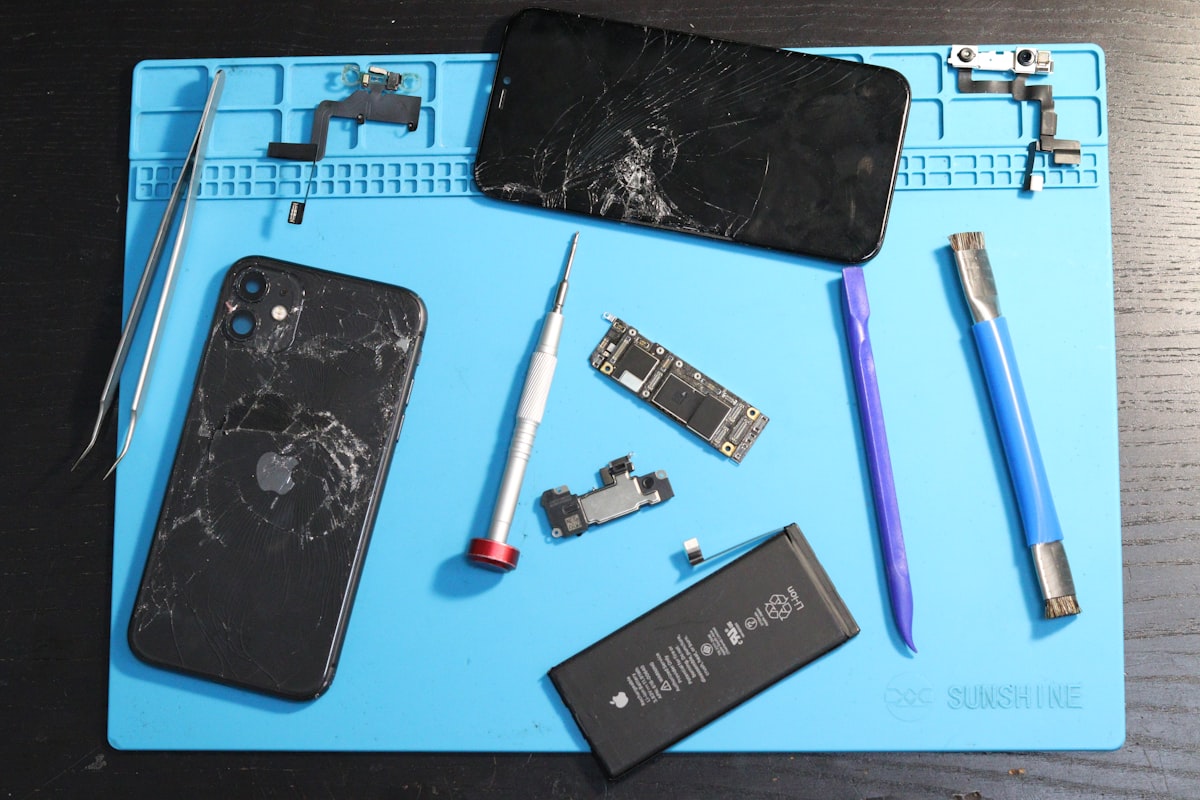
At my repair bench I keep two matching older iPhones for this test, both on the current iOS, both models predating the same-model part reuse Apple added with the iPhone 15. This month I lifted a genuine Apple screen from one into the other. The phone distrusted me at once: a warning about the display, another about the battery, and True Tone, the setting that warms the screen to room light, gone from settings. Nothing was broken. The software had decided that a part it did not personally ship is a part it will not fully honor.
For a decade the right-to-repair fight was about access: the part, the manual, the tool. That fight is largely won on paper. What I keep hitting at the bench is the fight that replaced it, over whether the software will trust the part once you have it.
The access win is real. Colorado's expanded law, House Bill 24-1121, took effect on January 1, 2026, and does what earlier laws did not: it names parts pairing directly, barring manufacturers from using it to block a replacement part, reduce a device's performance, or "display misleading alerts or warnings about unidentified parts." Software tools have to be free; only physical tools can carry a fee. Jeff Bridges, the Colorado state senator who sponsored it, called it "the first right to repair bill that Google, Apple, and independent repair shops all agreed on."
And it is not alone. The Repair Association counted more than 33 right-to-repair bills filed across 13 states in January, and on July 31 the EU's repair directive becomes national law across all 27 member states, forbidding hardware or software techniques that impede repair and requiring, under Article 5(4), spare parts at a "reasonable price that does not deter repair." So why does my bench still argue with me.
Because a law on the page is not a phone in the hand. Colorado's ban applies only to devices first sold or used after January 1, 2026, leaving every phone already in a pocket untouched. It also exempts "standalone biometric components used for authentication," precisely the Face ID and Touch ID surface where the lockouts bite hardest. The EU's ban carries its own escape hatch, for restrictions "justified by legitimate and objective factors."
Apple's side belongs on the page, and it is not hidden. The company says its genuine parts are "individually calibrated" with data stored on its servers, a process that "ensures that parts meet performance, security, privacy, and safety expectations." It warns that until then, "you won't be able to use Face ID or Touch ID," and that nongenuine parts or untrained repairs "might affect the functionality, safety, security, and privacy of the device." A real safety and anti-theft argument. It is also, conveniently, an argument for keeping the keys.
iFixit has tested this. When Apple shipped its Repair Assistant with iOS 18 in 2024, the vague "Unknown Part" scare-icon gave way to a calmer "Parts and Service History" link buried in settings, genuine progress. But when iFixit's testers swapped logic boards between matching iPhone 15 units that year, Face ID failed consistently. One reported that the finish-repair flow "provided no option for it, just errors," the selfie camera showing a blank image; another watched Face ID go "disabled entirely" after a camera swap, alongside boot loops and mid-run diagnostic errors. iFixit's Elizabeth Chamberlain was blunt: "wait on this software update for now, if you're going to do any repairs."
This matters to you, not just to me. The U.S. Public Interest Research Group (US PIRG) found that repairing instead of replacing could cut a household's spending on electronics and appliances by about a fifth, roughly $330 a year, with a 2025 update putting it closer to $382. Those are conditional numbers, not a promise. But behind them is the landfill: every phone written off because a genuine screen would not calibrate is lithium and cobalt in the ground, a fire waiting in the waste stream.
My honest read: the direction is right and the destination is not here yet. If you own an iPhone 15 or later and a steady hand, Apple now lets you reuse and calibrate a genuine part from a matching phone; budget an afternoon for the software to sulk. Anything older, or any repair you are unsure of, take the genuine part to an authorized shop and let them run the calibration. The two-year question I ask of every device, whether it will outlive a battery you can replace, now has a second clause: whether the software will let you. What I know at the bench now that I did not a few years back: the part is finally, legally mine. Whether the phone will use it is the fight that is left.