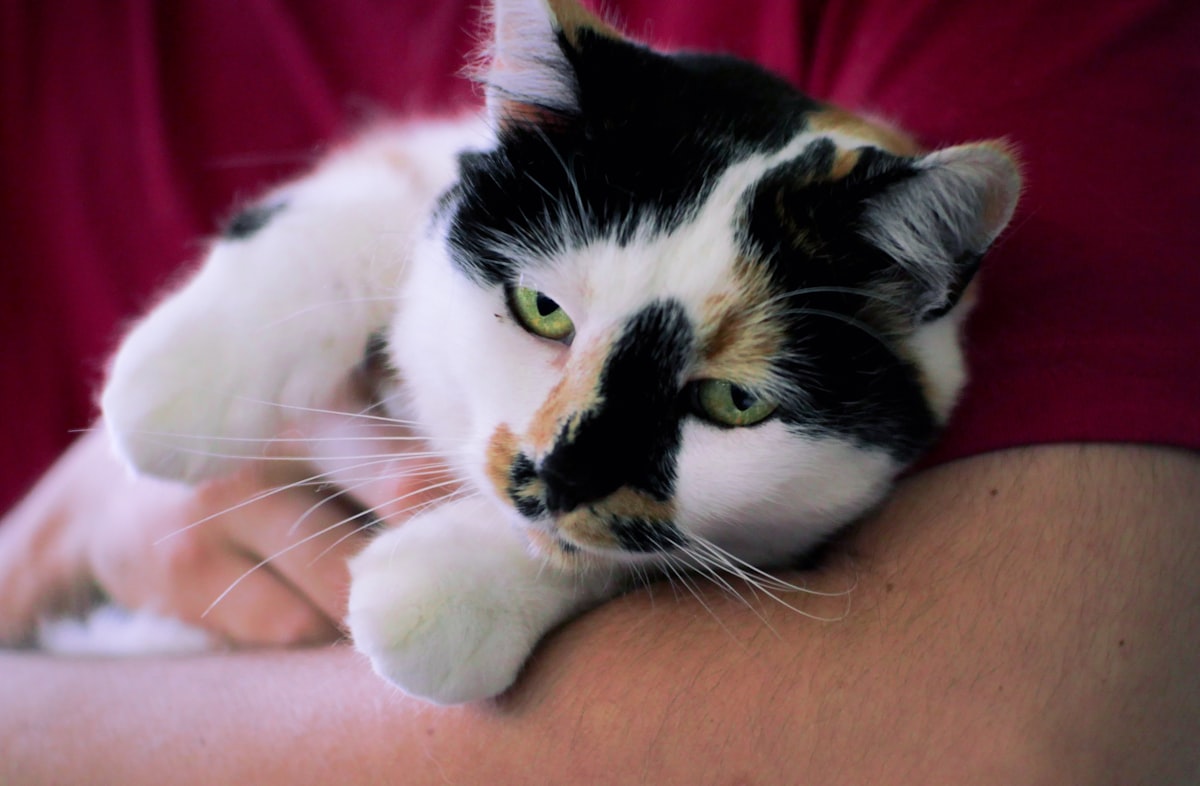
The vet on our street has a waiting room busier than my own doctor's, and better upholstered. I went past it again this week behind a woman carrying a cat the way you carry a sleeping toddler, one hand flat under the back legs, the other cupping the head so it would not wake. She was not embarrassed. Why would she be. That was her family in her arms, and she was taking it in to be looked after.
The Americans have put a number on the thing I keep watching happen. The American Pet Products Association, the industry's trade group, counts pets in about 71 percent of U.S. households, roughly 95 million homes. The Census Bureau, meanwhile, has families with a child under 18 down to 39 percent, from 54 percent in 1974. Line those two up carefully, because they are counted different ways, and the shape still holds: more American homes now have a dog or a cat than have a small child in them.
What interests me is not that fact on its own, which gets trotted out to scold a generation for choosing a spaniel over a stroller. It is what people do with their money once the animal is in the house. The APPA puts 2025 industry spending at 158 billion dollars and projects 165 billion for 2026, and the striking part is how little the economy dents it. In its 2025 survey, 77 percent of owners said the economy had not changed whether they keep a pet at all. A survey the animal-health company Elanco commissioned this summer found people cutting restaurants and travel long before they cut the dog, with 95 percent calling pet health a priority they would not reduce. The pet food is the last thing in the cart to go, not the first.
The lazy read is that pets are replacing children. I do not think that is it. The American Veterinary Medical Association finds about 80 percent of dog owners and 70 percent of cat owners already call the animal a family member, full stop, and you do not means-test family. Once something crosses that line in your head, its costs stop being discretionary and start being simply what you owe. The vet bill joins the rent and the electricity in the category of things you find the money for, because the alternative is unthinkable in the same flat way that letting the child go hungry is unthinkable.
There is a generational tilt to it, and I recognize myself nowhere flattering in it. Rover's own research, the pet-sitting company's, has half of Gen Z owners treating a pet as a fair rehearsal for a baby, and millennials 17 times likelier than their parents' generation to say they delayed children and got the animal in the meantime, not instead. My mother would have found the whole idea daft, a dog is a dog. She also fed ours from the good pot and cried when he died, so I would not push her too hard on the philosophy.
The woman with the cat went in, and the door did its soft hydraulic sigh behind her. Whatever the receptionist quoted her, she was going to pay it. That is not madness, and it is not the market. It is just what you do for your own.