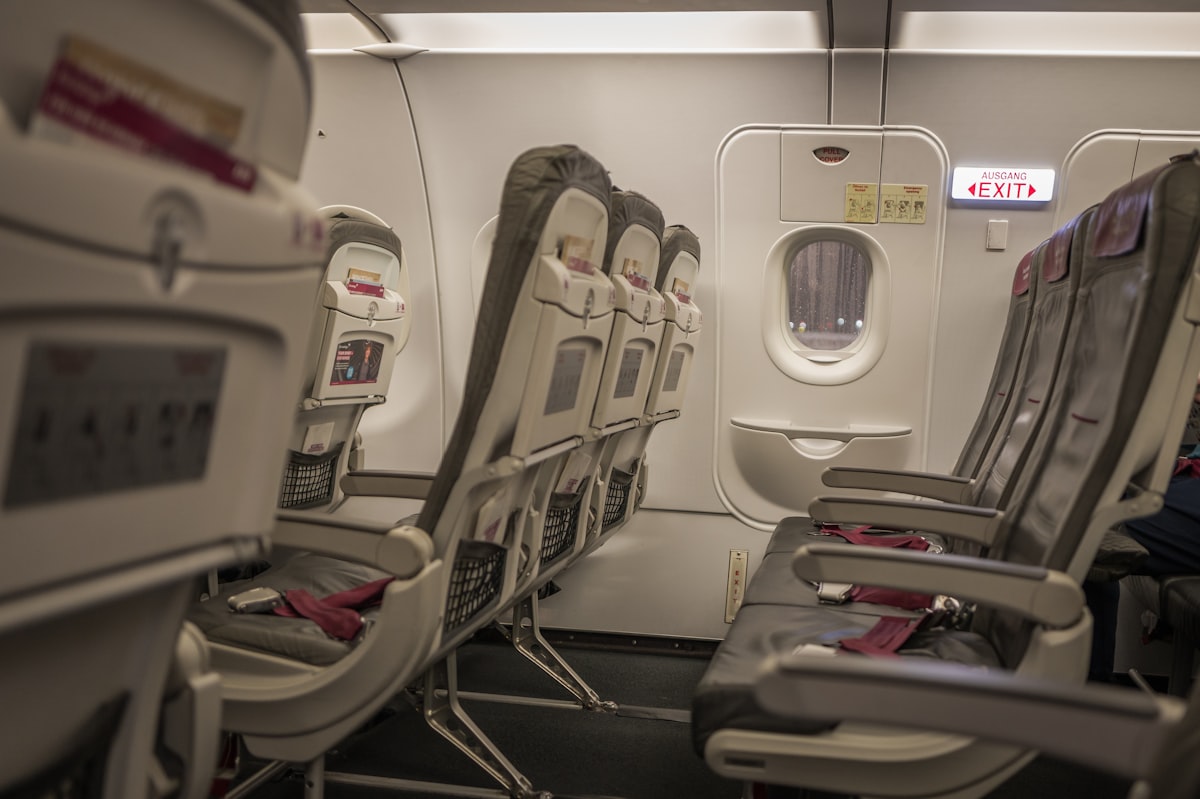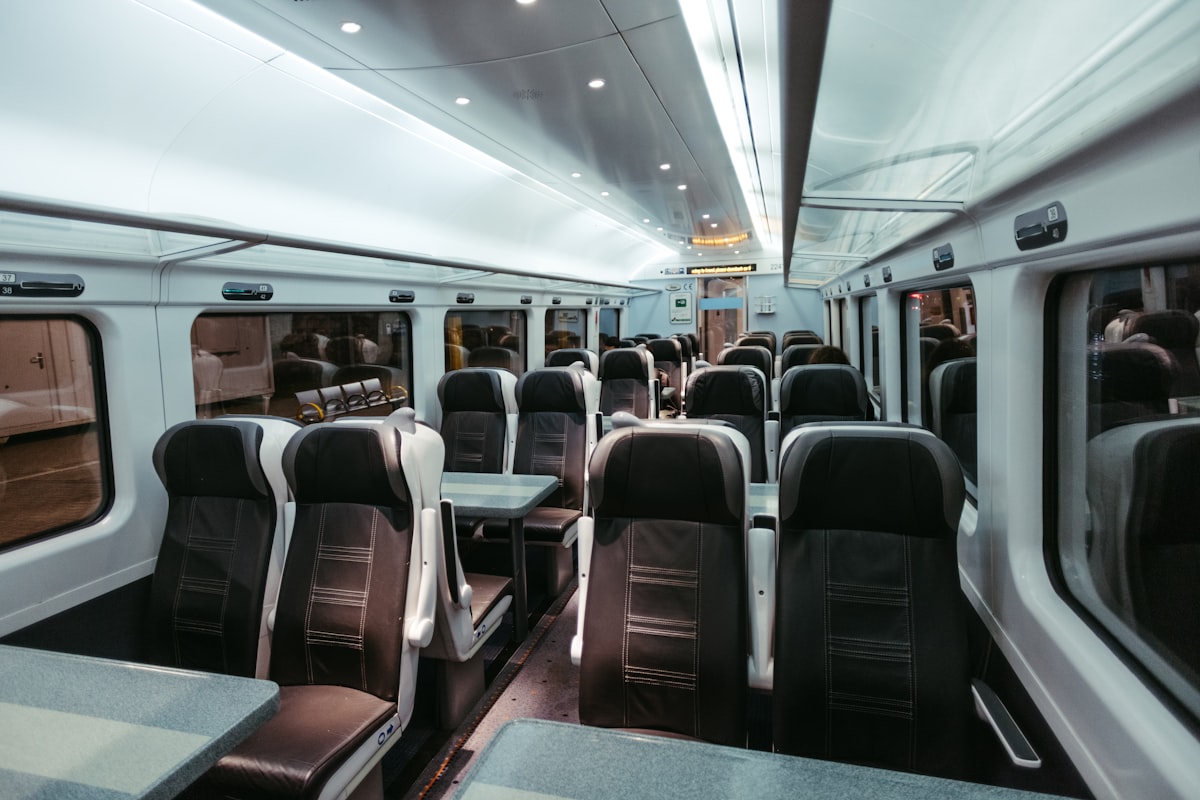
Somewhere in Irish law there is a sentence forbidding you to play a gramophone on a train. Here it is whole: "No person while upon the railway or in any vehicle shall to the annoyance of any other person or if requested not to do so by an authorised person, sing, perform on any musical or other instrument or use any gramophone, record player, tape recorder or portable wireless or television apparatus." A portable wireless, for younger readers, is a radio you could carry. The bye-law was made in February 1982 and came into force in May 1984. Its list of things you may not use is a closed one, and a phone is not on it, though the same instrument separately forbids anyone to "molest or wilfully interfere with the comfort or convenience of any passenger," which names no objects at all. Under bye-law 2 a breach of either is an offense, so it hardly matters which an inspector reaches for. The conduct rule is 1984 either way.
I bring it up because of the story now in circulation, which RTE Brainstorm set out plainly in a piece updated this month: Irish Rail "have introduced new etiquette guidelines and a €100 fine," the Liberal Democrats have proposed fines of up to 1,000 pounds, and the mayor of London has launched a campaign, which Transport for London runs. Take those three, add United Airlines, and between them you get campaigns, polling and one failed amendment. Not one of them created a new prohibition or a new penalty in law. One of them did write something new, and it sits in a contract rather than a statute. What they did was advertise rules they already had, which is what an institution does when the informal version is not doing the work.
Every fine in the story was already on the books
Irish Rail's 100 euro is real and also not new. Breaching that bye-law has carried an on-the-spot penalty since the Railway Safety Act 2005, whose section 133 sets it at 100 euro unless regulations specify some other amount. When the company publicized its guidelines in August 2025, communications manager Barry Kenny told The Journal that inspectors "have and will" use the penalty, though those guidelines cover vaping and feet on seats too, and I found no source breaking the notices out by behavior. The Journal said the quiet part in its own copy: the fines "have already existed under the CIE Bye-Laws."
Britain is the same shape, better drafted. Byelaw 7, confirmed in 2005 and headed "Music, sound, advertising and carrying on a trade," reads: "Except with written permission from an Operator no person on the railway shall, to the annoyance of any person ... use any instrument, article or equipment for the production or reproduction of sound." No list of objects there, so nothing for the years to overtake. Two clauses do the work: a quiet call is not caught, and a busker with a permit is not either. Byelaw 24 makes a breach an offense carrying a penalty "not exceeding level 3 on the standard scale," which for England and Wales the Sentencing Act 2020 puts at 1,000 pounds.
Now, what the Liberal Democrats asked for in April 2025. They wanted "change in the law to explicitly ban playing music and videos out loud from a phone on public transport in England, with those who breach the ban facing fines of up to £1,000," delivered by "amending existing legislation known as railway byelaws" and by amending the Bus Services Bill then before Parliament, and promoted "through a national publicity campaign to make clear that playing loud content on public transport is now banned." Their own notes to editors grant that other conduct is "already prohibited in existing railway byelaws." Not an ignorance claim, then, but a request for clarity and enforcement, scoped to England. It is still a remarkable document. They pitched the fine at 1,000 pounds, which is byelaw 24's existing ceiling to the pound, and asked for a poster campaign announcing a ban byelaw 7 has carried since 2005.
Buses were covered earlier still, and more widely. The 1990 conduct regulations forbid a passenger to "play or operate any musical instrument or sound reproducing equipment to the annoyance of any person on the vehicle or in a manner which is likely to cause annoyance to any person on the vehicle," so on a bus you need not have annoyed anyone in fact, only have been likely to. That wording replaced an older rule about noisy instruments, so 1990 is when the phrasing arrived rather than the ban, and the ceiling is level 3 there too, under section 25(3) of the Public Passenger Vehicles Act 1981. As for the vehicle the party named, I searched the Bus Services Act 2025, which received Royal Assent on 27 October 2025, for the words "music," "noise" and "loudspeaker," and found none of them.
Only the airline wrote a new rule
Transport for London, to its credit, does not pretend otherwise. Its August 2025 posters went up on the Elizabeth line as the latest phase of the #TravelKind campaign it launched in 2017. They rest on a survey of 1,000 Londoners in June 2025, 70 percent of whom called loud music and headphone-less phone calls a nuisance. The release mentions no fine, no byelaw and no enforcement of any kind. Posters and a headphone giveaway, and it says so.
Only United wrote something genuinely new, in its contract of carriage, the terms you accept when you buy a ticket rather than anything resembling law. I compared two archived copies. In the one saved on 24 January 2026, stamped as revised in January 2025, the word headphones does not appear in the document. In the copy saved on 14 July 2026, stamped 11 May 2026, Rule 21, which lists the grounds on which the airline may refuse to carry you, had grown by exactly one line: "Passengers who fail to use headphones while listening to audio or video content." The remedy is being put off the aircraft, potentially for good.
A majority would rather not say anything
The number everyone quotes comes with caveats. Savanta polled 2,174 UK adults online across three days in February 2025, commissioned by the Liberal Democrats, who are also the party pressing the policy; the exact question is not published in the release and I could not locate the data tables. On that basis, 54 percent said they would not feel comfortable asking someone to turn their music down, 63 percent of women against 46 percent of men. It is not measuring what TfL measured; being annoyed and being willing to speak are different things. Nor can I tell you it has got worse, because nobody put this question to anyone in 1984 and there is no baseline to hold it against. What I can say is that a rule policed by passengers asking each other works only while they will ask, and on the single reading available, a majority would rather not.
So bin the advice to go and say something, which falls hardest on the people the same poll shows are least comfortable saying it, women by 63 percent to 46. Notice instead that the 1982 rule finishes its own sentence: it bites when you carry on "if requested not to do so by an authorised person." The request that works was always the official one, and the nearest thing to a new duty anybody enacted last year points at the staff rather than at you. Section 34 of that Bus Services Act, which I came across while checking what the Act does contain, writes a new section 144F into the Transport Act 2000 that will oblige operators to train staff to recognize and respond to anti-social behavior. Will, because it has not started. The Act switched section 34 on only for the purpose of writing regulations, and left the rest to a day the Secretary of State has yet to name. Section 33, immediately before it, came into force on 27 April 2026. A fitting close to a year in which everybody announced something and almost nobody turned anything on. Tell a member of staff anyway. It is their job, they have a standing you do not, and they do not have to sit beside the offender for the next forty minutes.