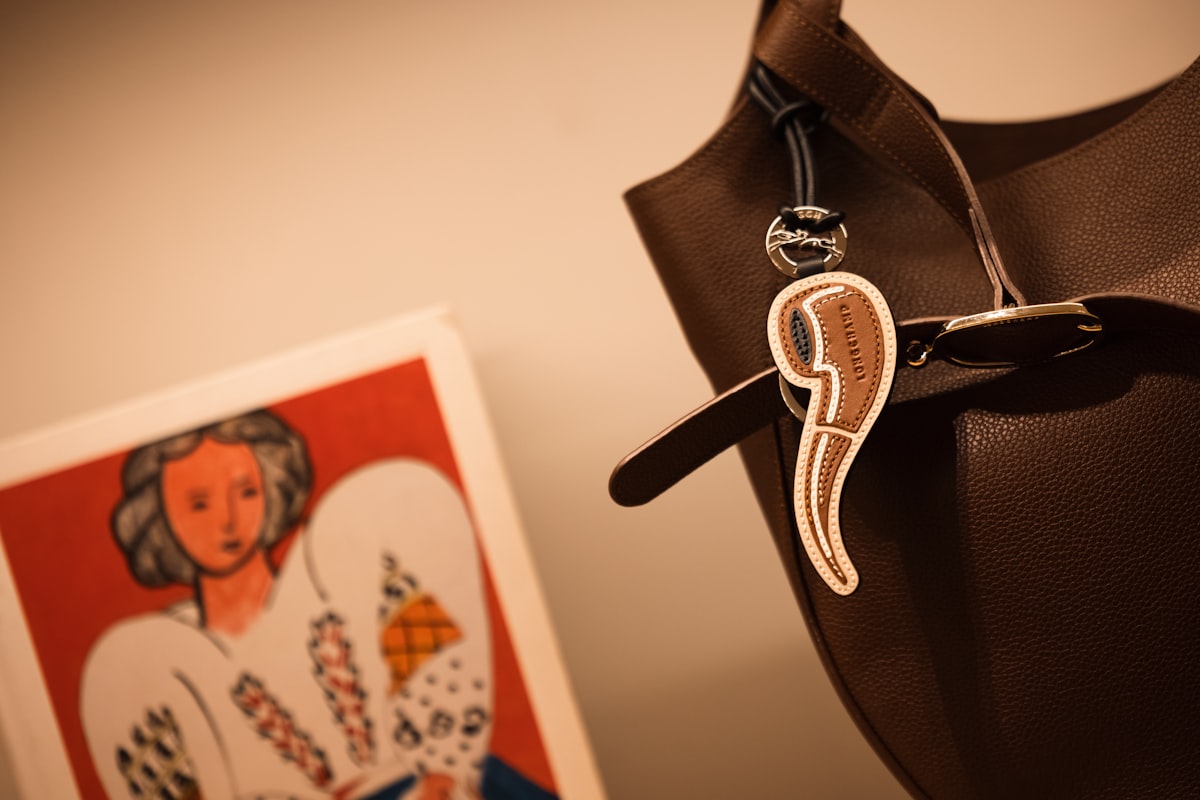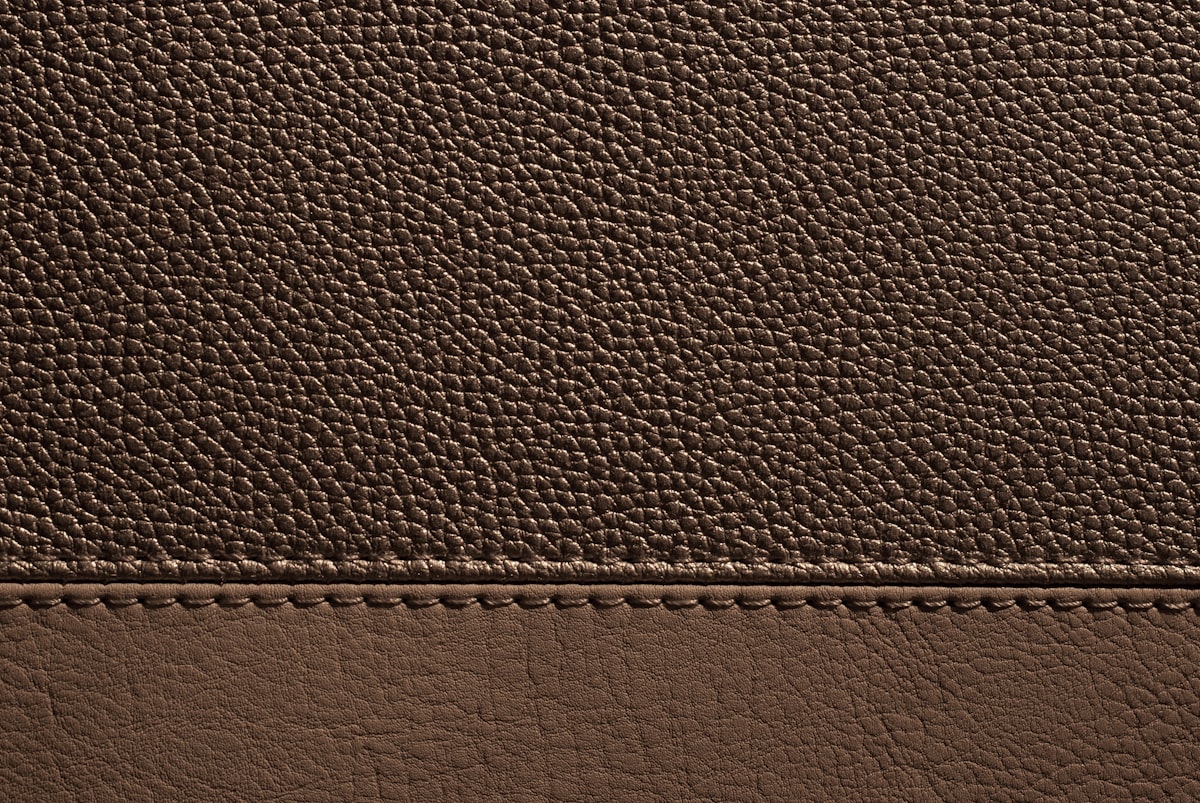
The panels were grown rather than raised: fine mycelium, the root structure of a fungus, cultivated in California, then tanned and finished in France by Hermes tanners as if it were a hide and cut in the workshops like any other skin. The house called the material Sylvania and put it into a version of its Victoria travel bag, with calfskin handles and trim, which is why nobody called it vegan. Hermes announced it in March 2021 after three years of work with a California company called MycoWorks, and the coverage said the bag would be in stores by the end of that year.
As of July 27, 2026, I can find no published report that the bag went on sale, no price for a Victoria in Sylvania, and no announcement from either company that it reached a shop. Absence of reporting is not absence of the event: a boutique run, or one market, could have gone unrecorded. I can find no public statement from Hermes either way.
The story you will read about mushroom leather is that it has graduated from novelty to luxury supply chain, that Hermes bought into the technology rather than merely buying the material, and that the last obstacle is a green premium of 15 to 25 percent that scale will grind down. Almost none of it holds up.
Start with who put money in. No announcement by either company records Hermes taking a stake in MycoWorks. The disclosed money came from elsewhere: a $125 million round in January 2022 led by Prime Movers Lab, with GM Ventures among the other named backers, about $187 million all told. Hermes was the customer, the co-developer and the finisher. Its name was on the material, not on the share register. Its own vertical integration is the unglamorous kind: tanning inside the group, and on April 10, 2026, a twenty-fifth French leather goods workshop, at Loupes in southwest France, eventually 260 artisans making Kelly and Constance bags. Three more are planned. That is what a house does when it intends to secure a supply of skins.
The chief executive conceded the weakness and said he had just fixed it
On October 16, 2025, Matt Scullin, then MycoWorks' chief executive, published an open letter on LinkedIn that Sourcing Journal reproduced the next day as one continuous quotation, in a report by Alexandra Harrell. Reishi was beloved, he wrote, with "a hand feel arguably superior to any leather." Then this: "It is not cow leather: it has a lower tear strength, a lower tensile strength ..." Mycelium from anyone, he wrote, "is not a drop-in replacement for cow or calf hides in production."
He also said he had solved it. The newest version of the company's Rei-Tan tanning lifts tensile strength, the pull a material takes before it breaks, from about 4 to 18 megapascals, a gain he puts at 4 to 5 times and one he says leaves mycelium "performant enough to be a drop-in for leather." That is the one property he measures, and he argues it is "a good proxy" for the material's mechanical performance and durability overall. He does not measure tear strength, and tear strength is what stops a corner going at the stitch line once a strap has been carried for years. Both halves came from the man selling it, and together they are the most useful thing anyone has said about this material in five years.
The reason he gave for closing the factory was the cost of capital
Strength, then, is not what closed the plant. The factory at Union, South Carolina, billed as the first commercial-scale plant of its kind anywhere, ran to 136,000 square feet and began production in September 2023. The result "proved to be too expensive for the world we currently live in," Scullin wrote, a factory carrying "a cost of capital that is too high to warrant, especially when cheaper sources of mycelium exist that can also be elevated with our Rei-Tan technology."
Production ended in October, the California pilot plant and head office closed in November, and this year the intellectual property and operating assets went to DFX Corporation, in what MycoWorks called a "strategic restructuring". DFX is led by Daniel Frydenlund, who by his firm's account has turned around and exited 17 technology companies, and it reopened the California site as an innovation center on June 26. Buying mycelium from other producers and tanning it was the model Scullin set out in October, and DFX's own announcements have not restated it.
Reishi did reach buyers, in numbers you can count: about 40 Nick Fouquet hats at roughly $700, a pair of limited-edition Ligne Roset pillows, the interior of a one-off Cadillac concept car. Desirability was never the ceiling. Volume was.
Bolt Threads ran the same experiment before them with a rival material, Mylo, whose Mylo Consortium of brand partners included Stella McCartney, Kering, Adidas and Lululemon, and which was used in McCartney's hundred-bag Frayme run. Bolt said Mylo was ready for commercial production in September 2021 and paused it in July 2023, after raising more than $300 million.
The premium is not the number holding this back
I cannot source that 15 to 25 percent premium anywhere: not in the trade coverage, not in the work Fashion for Good published last November on why these materials cost more, and not in anything either company has said. The one hard price in the record cuts the other way: Fortune reported in November 2022 that Mylo ran about $25 a square foot, comparable to high-quality calf. MycoWorks would not give Fortune a price at all. Near parity, and it was paused anyway. What kills these materials is not the gap on the price tag, it is the cost of building the factory and the volume that never arrives to fill it. Scullin's own account of why adoption stays low, after five years and a plant, comes down to two things: "scale and cost."
Four firms have published a forecast for this market. Put them all on a 2033 endpoint, at the growth rate each page's own base and target imply, and they land between $202 million and $345 million. That is broad agreement. What they cannot agree on is the present: Future Market Insights puts 2024 at $53.6 million, and Trellis has Market Intelligence putting the same year at $12 million, four and a half times lower, on a year that had already ended when both were published. The size a market has already reached is a measurement, not a forecast.
Nor do the pages always agree with themselves. Global Growth Insights gives the same $16.46 million as its 2024 figure, its 2025 figure and its 2026 figure, on one page.
That $336 million by 2033 is roughly 2 percent of Hermes' 2025 revenue.
The rule that took effect on July 19 bans destroying unsold clothes
The Digital Product Passport, the EU's plan to attach a scannable record of what a product is made of to the products it covers, is not forcing anyone's hand yet. Nothing has been adopted for clothing, where the rule is penciled in for 2027 and would apply later still.
What did land is narrower and sharper. From July 19 large companies may no longer destroy unsold clothes, clothing accessories or shoes anywhere in the EU, with medium-sized companies following in 2030. Notice what that regulates. Not what a bag is made of. What happens to the ones you failed to sell.
Turn it inside out and two questions come back, the ones I would ask of any material. Can you buy the thing, in a shop. Will the seams hold in ten years. Nobody can show me the shop, and nobody can tell me about the seams, because telling me takes a bag somebody bought and carried.
Correction and response. If the Victoria in Sylvania did go on sale, we want to say so. Hermes, DFX Corporation or anyone who bought or sold one can write to editor@kaleidomag.com, and a correction or response runs promptly, at the same prominence as this piece, marked and dated.