Micron sold memory to ordinary people under the Crucial name for 29 years. On December 3, 2025, it announced it was getting out. The press release is short and unembarrassed. "The AI-driven growth in the data center has led to a surge in demand for memory and storage," said Sumit Sadana, Micron's chief business officer, so the company took "the difficult decision to exit the Crucial consumer business in order to improve supply and support for our larger, strategic customers in faster-growing segments." Nothing vanished overnight. Crucial kept shipping into February 2026, and Micron said it would keep honoring the warranties. But larger, strategic customers means data centers, and you are not one.
For most of those 29 years, the answer to an expensive laptop was to buy the cheap configuration and add memory yourself later, because the long trend in memory prices was down. That habit is what this shortage has actually broken. Not repairability as a principle, which is in better shape than you would guess from the headlines. The specific, boring practice of buying thin and topping up in year two.
Most of the numbers flying around are forecasts. One is not. On its fiscal first-quarter earnings call on February 24, 2026, HP said its own memory costs had already gone up "roughly 100% sequentially," a doubling inside a single quarter. On the same call, chief financial officer Karen Parkhill told analysts that memory and storage together had made up "roughly 15% to 18% of our PC bill of materials" the quarter before, and that HP now estimated this at roughly 35 percent for the year, with the largest impact still to come in the second half. She said HP would claw it back with "a combination of product cost actions, company-wide cost actions, and price increases." Those are all HP's own figures, the 35 percent is an estimate rather than a count, and it covers memory and storage together rather than RAM on its own. Market-wide, Gartner expects memory to reach 23 percent of what a PC's parts cost this year, against 16 percent in 2025.
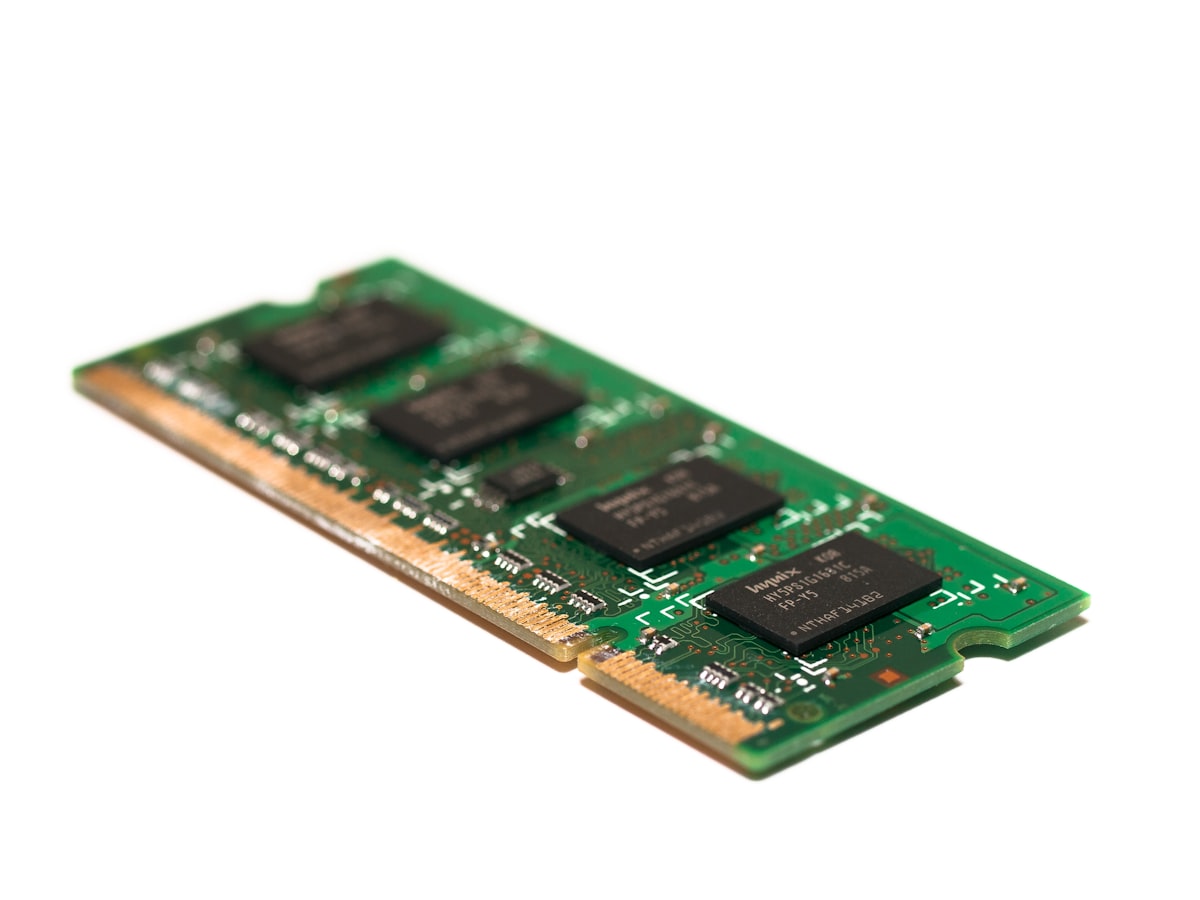
Framework, which builds its laptops around parts the owner is meant to replace, spent this shortage publishing its own costs. In late November 2025 it pulled standalone memory from its store, saying in a post on X that it had to "head off scalpers and preserve inventory for people buying it with our DIY Edition laptops," the DIY Edition being the version you assemble yourself. It gave inventory as the reason, and the measure turned out to be temporary. As of July 28, 2026, the modules are back on Framework's German storefront and can be bought on their own, a single 16-gigabyte stick listing at 279 euros, a price that almost certainly includes German VAT.
As of July 28, 2026 there is still no mention of the change in the blog or the forum thread where Framework has documented every other move in this shortage. Micron's exit had left Samsung and SK Hynix still selling into the consumer channel, so there was a shelf left to refill. What came back was the shelf, not the old price.
Framework's running price log is where you can watch that happen, and it is the least varnished document in the industry. It charged 10 dollars a gigabyte in December 2025, and 13 to 18 by spring.
In its update of July 22, 2026, the company said a supplier bill for one module type had come in at "more than double that of the prior inventory," and rather than cancel the affected pre-orders it moved them down a capacity tier and charged that tier's original price. Framework prices memory close to the weighted average of what it pays its suppliers, so where its own number lands above retail it tells DIY buyers to go and buy elsewhere. It had said in December 2025 that it would add a link to a parts price-comparison site in the configurator to help them do it.
I have bought a lot of memory over the years, mostly unglamorous modules for the refurbished mini-PCs in the cupboard I insist on calling a data center, and I have never paid anything close to 13 dollars a gigabyte. That is the part no shipment forecast captures. An upgrade I would once have done on a whim, barely noticing the money, is now a decision I have to sit down and make. And I am the easy case, a hobbyist buying parts for machines nobody depends on. The person this actually lands on is the one who chose the 8-gigabyte configuration in 2023 because topping it up in a couple of years would be cheap, and who is now finding out what that assumption was worth.
Apple's cheapest laptop is the sealed one
Then look at what stayed cheap. Apple announced the MacBook Neo on March 4, 2026 and shipped it on March 11 at 599 dollars, with 8 gigabytes of memory and no larger option. The memory is not soldered to the board, which would at least leave something a determined person could get at. It is a separate chip stacked on top of the processor inside one package, and that is how the processor arrives from the factory, because Apple reused a chip built for a phone and the phone's memory came along with it. Jitesh Ubrani of IDC, the research firm that tracks PC shipments, says the competitive pressure from the Neo "is providing a partial offset to broader price increases, keeping some low-cost notebook options alive." On June 25, 2026, Apple raised the Neo to 699 dollars, citing memory and storage costs. The machine holding prices down at the low end is the one whose memory is set at the factory. A machine with no memory option also has no memory upsell to lose.
It is also a real computer, and I am not going to pretend otherwise. Memory sitting in the same package as the processor is genuinely faster and easier on the battery than a module in a socket. The cost is not performance. It is that the number on the box is the number for the life of the machine.
Waiting is now the expensive move
The forecasts all point one way. Back in December 2025, Dell, Lenovo, HP, Acer, and ASUS warned customers of contract resets and list-price increases of 15 to 20 percent on systems shipping in the second half of 2026, as Tom's Hardware reported. In June 2026, IDC said it expects the average PC to sell for 17 percent more this year than last, with shipments down 11.3 percent and no relief before the end of 2027. Read that average carefully. Part of it is the same machine costing more, and part of it is the cheap machines leaving the shelf altogether. Gartner, forecasting separately in February, expects the sub-500-dollar PC to be gone by 2028, and consumers to hold onto their laptops about a fifth longer by the end of this year. Holding them longer used to mean upgrading them.
So invert the old rule. TrendForce, which tracks memory pricing, expects contract prices for conventional DRAM, meaning what the memory makers charge the PC makers, to rise again this quarter by between 13 and 18 percent. Those increases reach shop shelves with a lag, which is why Framework's log is a better guide to what you will actually pay than any contract figure. Either way, waiting is now the expensive move. Buy the memory in the same order as the machine, and before you compare processors, find out whether the module sits in a socket you can open. If it does not, you are not buying a computer with 8 gigabytes. You are buying a computer that will still have 8 gigabytes on the day you throw it away.