I have a page on my own site called "I was wrong," and the entry I get emailed about most is from 2016, when I told my readers that self-driving cars were vaporware, that the hard problem would not yield the way the pitch decks promised. I was half right about the timeline and fully wrong about the ceiling. The receipt arrived this month: a dozen empty robotaxis stranded with dead batteries in San Francisco traffic during a Fourth of July fireworks show, run by a company that was, by every other measure, having its best year yet.
Start with the number that is hard to argue with. Waymo, Alphabet's self-driving taxi service, went from 50,000 paid rides a week in May 2024 to 500,000 by March 2026, a tenfold jump, per a ridership chart TechCrunch built from the company's own disclosures. On July 8, 2026, it added four cities at once, San Diego, Las Vegas, Tampa, and Denver, bringing driverless service to more than ten US metro areas on a fleet of roughly 3,500 vehicles and more than 20 million lifetime rides, CNBC reported. In February, Waymo closed a $16 billion round at a $126 billion valuation, the largest single investment an autonomous vehicle company has ever taken, led by Sequoia, DST Global, and Dragoneer, with Alphabet still the largest shareholder, the company said. Co-CEOs Tekedra Mawakana and Dmitri Dolgov wrote that "we are no longer proving a concept; we are scaling a commercial reality." Set that against Tesla, whose "Robotaxi" service launched in Austin in June 2025 and, a year later, still ran about 20 driverless vehicles as of early June, even after its geofence grew to cover the whole metro, per Electrek. Tesla's own stated reason, per the same Electrek report, is that it is holding the fleet back on purpose until its FSD v15 software rewrite ships, a change Musk has described as growing the driving model from roughly 1 billion to 10 billion parameters, pushing any real ramp to late 2026 or beyond. Even granting that, the same report notes Waymo has said it runs more than 700 vehicles in San Francisco alone, more than Tesla operates anywhere.
Mawakana has also named the next target: 1 million paid rides a week by the end of 2026, with London as Waymo's first international market, launching later this year with the mobility operator Moove and, initially, human safety drivers while UK regulators work through a new small-scale AV pilot framework, per Fortune's reporting. UK Transport Secretary Heidi Alexander, quoted in that coverage, called it a chance to "increase accessible transport options alongside bringing jobs, investment, and opportunities to the UK." That is the pitch. Here is the math under it.
An independent forecaster, Dan Schwarz at FutureSearch, ran the fleet math in May and landed on a median forecast of 775,000 weekly rides by the fourth quarter, not a million. The raw math alone points a bit higher than that: at Waymo's current utilization of about 20 trips per vehicle per day, 500,000 weekly rides implies roughly 3,600 active cars, in the same rough range as the 3,500 CNBC reported for July, though neither figure is a precise, audited headcount, just rounded company and analyst estimates that do not move in a perfectly smooth line month to month. A million rides a week would need about 7,200 vehicles. Adding vehicles at the pace Waymo has been running, 265 to 300 a month, would get the fleet to 5,900 to 6,000 by year end, which that math alone puts at roughly 840,000 rides. Schwarz's own median comes in lower than that simple extrapolation, 775,000 rather than 840,000, because it discounts for exactly the kind of regulatory delay and operational friction, recalls, investigations, public incidents, this piece documents below. Closing the gap to Waymo's own million-ride target needs a faster ramp of the cheaper Ojai vehicle, a Zeekr-built platform priced around $32,000 against the $150,000 to $200,000 of an outfitted Jaguar I-PACE, or utilization pushed toward its theoretical ceiling of about 40 trips a day. Schwarz's framing of the Ojai's economics is blunt: "at $32,000, the payback drops to three or four months. That gap separates a capital money pit from a viable business." None of this makes the growth story fake. It makes "1 million by December" a stretch target dressed as a forecast, and a company with this much real momentum does not need the extra polish.
The part of the story that fits neither the hype nor the skeptic's camp is the edge cases Waymo has been quietly patching all year. In May it filed a voluntary recall of 3,791 vehicles after one drove into a flooded road in San Antonio in April and was swept into a creek with no one aboard; the software had detected the hazard, slowed down, and proceeded into the water anyway, CNBC reported. Both this recall and the one below run a bit higher than the roughly 3,500 to 3,600 "active" fleet figures above, because a recall covers every vehicle running the flagged software across all of Waymo's operating cities, not just the ones serving paid rides at that moment. That came about a month before a separate recall of roughly 3,900 vehicles that had been entering active freeway construction zones, per NHTSA's recall filing, and it followed an earlier one, in 2025, covering more than 1,200 vehicles after the software failed to detect thin roadway barriers like chains and gates, CNBC reported: three distinct software recalls in just over a year. Separately, the National Highway Traffic Safety Administration and, for the first time, the National Transportation Safety Board are investigating Waymo's pattern of passing stopped school buses, after school officials in Austin counted at least 19 instances since the school year began, per KXAN's reporting. The first notable case, TechCrunch reported, was in Atlanta last September, when a Waymo pulled out of a driveway and crossed in front of a stopped school bus from its right side. That bus-passing pattern is not the only Waymo matter before regulators right now: a wholly separate NHTSA probe, case PE26001, covers a January crash in which a Waymo struck a 9-year-old pedestrian who ran into the street from behind a double-parked SUV near a Santa Monica elementary school during drop-off hours, sustaining minor injuries, CNBC reported, an unrelated incident that has nothing to do with school buses. Waymo's chief safety officer, Mauricio Peña, told TechCrunch the company "safely navigates thousands of school bus encounters weekly across the United States" with no collisions in the flagged incidents, which may well be true and does not make the investigations go away.
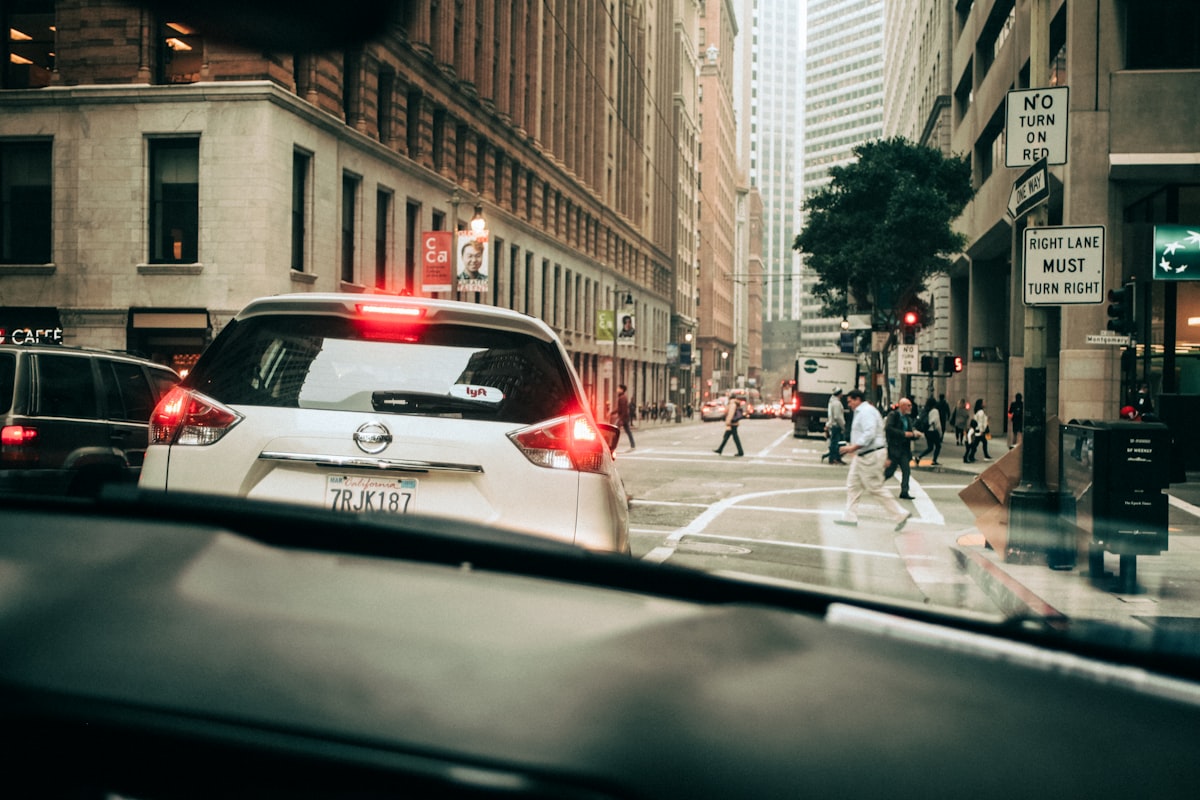
Then came the Fourth of July. During San Francisco's fireworks display, a dozen or more Waymos got stuck in gridlock near the Presidio, a large park and former military post on the city's northern waterfront, so long their batteries drained, and several had to be towed on flatbed trucks while stranded drivers climbed out of their own cars to yell at the empty ones blocking the road, NBC News reported. A separate car in the Mission, one of the city's central neighborhoods, drove straight into an exploding firework; the vehicle was undamaged and no one was hurt, Waymo told CBS News San Francisco. Waymo blamed "unplanned road closures" and said it is "evaluating ways to strengthen resilience," a reasonable line for the second public breakdown of its San Francisco fleet in seven months, after a December power outage left cars stopped at dark intersections, Fast Company reported.
None of that erases the ridership curve. A company that can carry half a million paying passengers a week, expand to four cities in a single day, and raise capital at a $126 billion valuation has clearly cleared the bar I thought was uncrossable a decade ago. But scaling a fleet and finishing a technology are different jobs, and 2026's data shows Waymo doing the first while still visibly working through the second, one recall, one investigation, one dead battery at a time. It is the more boring, more accurate story than either "the robots have won" or "it's all a mirage": the thing works often enough to be genuinely useful, and it still breaks in public often enough that you should read the recall notices before you decide it is finished. I will keep doing that so you do not have to, and I will update the page if I am wrong again.