I keep a spreadsheet of every charger and battery I own, sorted by watt-hours, which is either useful or proof I should get out more. Lately it has earned its keep, because the rules around the power bank in your bag have moved, and most travelers I know have the story exactly backward.
Start with what has not changed. Spare lithium batteries and power banks are not allowed in checked luggage. That is an FAA and ICAO rule of long standing, not a new ban: a loose cell that vents in the hold is a fire nobody can reach, so it rides in the cabin with you or not at all. The UK Civil Aviation Authority calls a lithium fire an aircraft's number one safety risk, and reports of devices in hold bags more than doubled in a year, from 316 in 2024 to 643 in 2025: people caught by an old rule, not a new one.
What is actually new is how airlines let you use the charger once you are seated. After an Air Busan A321 caught fire before departure in January 2025, Korea's Aviation and Railway Accident Investigation Board placed the origin in an overhead bin, and forensic investigators later called a power bank the likely cause. Carriers across Asia stopped letting you charge from one in flight or stash it overhead, and that habit is now spreading west.
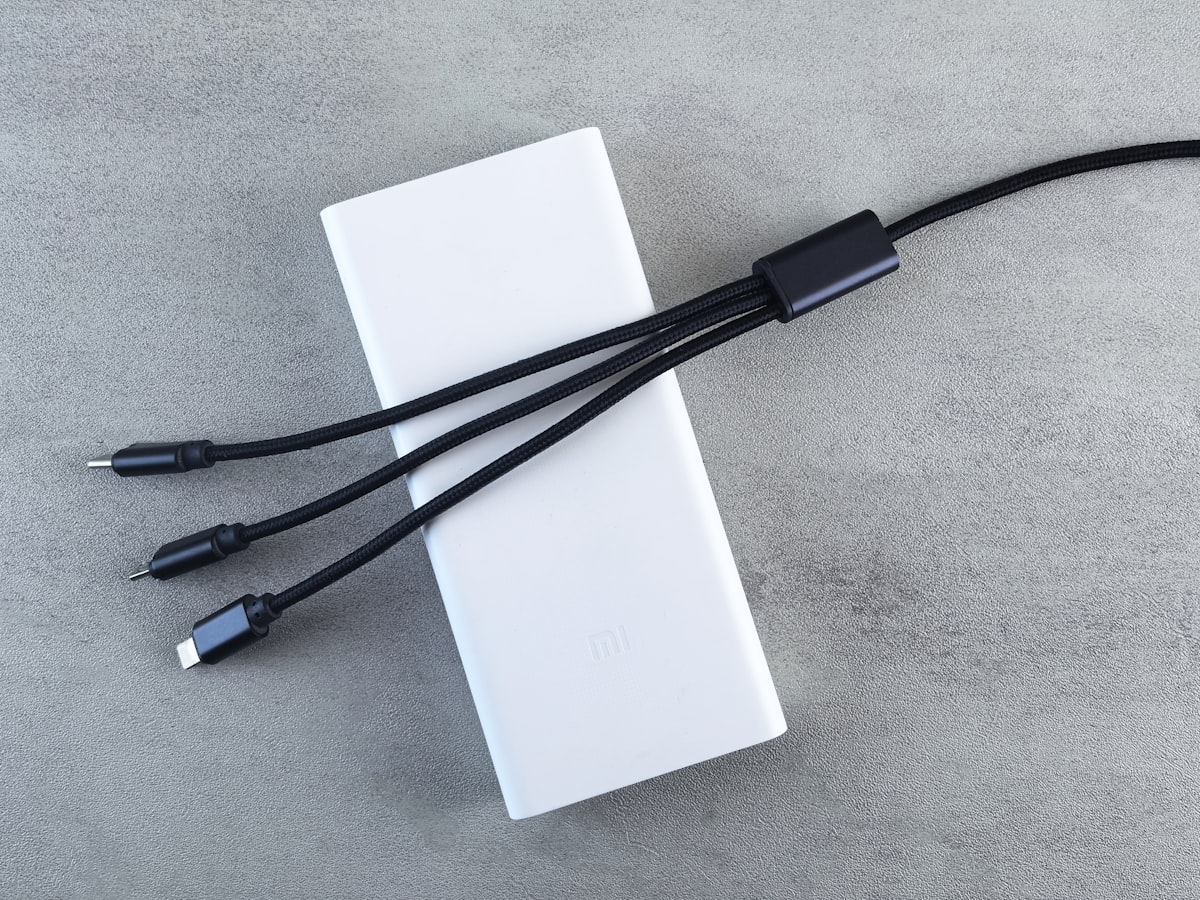
Now the label. Watt-hours, not milliamp-hours, are what the limit measures, because energy is what feeds a runaway cell. The math is Wh equals mAh divided by 1,000, times voltage, and the voltage you use is 3.7 volts, the cell voltage, not the 5 or 20 volts printed on the USB port. So a 20,000 mAh bank is about 74 watt-hours, comfortably under the 100 Wh line. Under 100, you are fine. From 100 to 160 you need airline approval and are capped at two. Over 160 is banned outright.
The rule sheet, airline by airline:
South Korean carriers (from March 2025): no power banks in overhead bins, kept in the seat pocket or on you, no charging from the seat USB, and five banks in total per passenger, whatever their size.
EVA Air, Thai Airways, Singapore Airlines and Scoot, China Airlines, Starlux, and AirAsia, and Cathay Pacific: no using or charging a power bank in flight.
The Lufthansa Group carriers (Lufthansa, SWISS, Austrian, and Eurowings, from January 2026), plus Qantas and Emirates: same, no in-flight use, kept within reach.
Southwest, the first US carrier to move: charge only in plain sight, on your lap or tray, never in a bag or overhead bin.
The packing rule is dull and it works. Charge everything before you board, keep the bank in the cabin with the watt-hours printed on it, and expect to see it, not use it, at 35,000 feet.